Of Human Bondage
A First Look at Debbie Caruana Dingli’s Solo Exhibition at Spazju Kreattiv
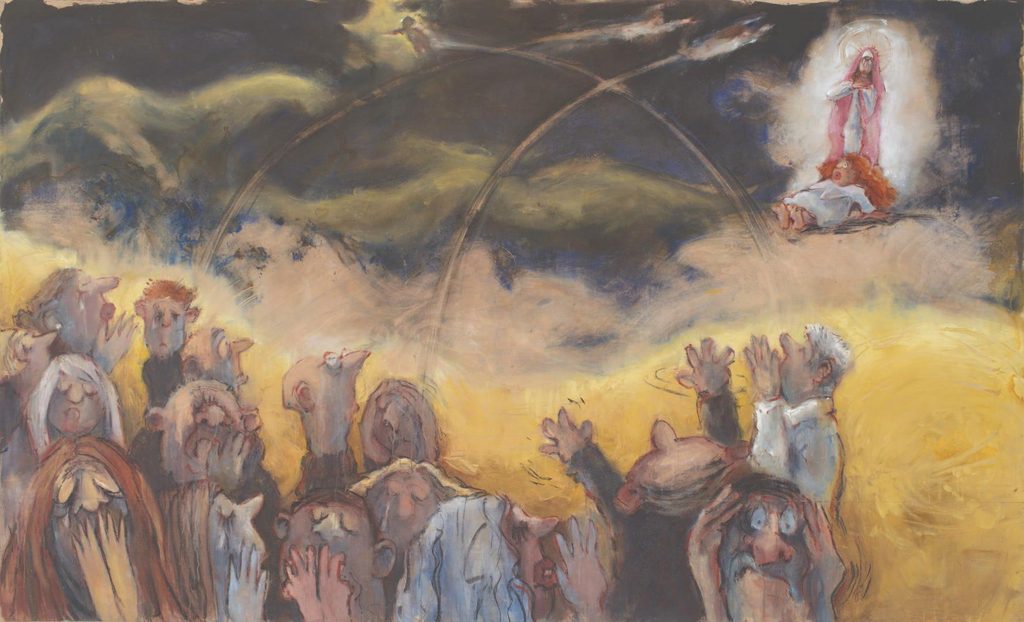
“I tend to notice the underdog.” – Debbie Caruana Dingli
Of Human Bondage, Debbie Caruana Dingli’s forthcoming solo exhibition at Spazju Kreattiv in Valletta, scheduled to run from 6 November 2026 to 3 January 2027, presents nine new large-scale paintings highlighting the underdog – the overlooked and marginalised – and paints them as monumental. Figures who would ordinarily be rendered small, or not rendered at all, are given the physical space to be seen and celebrated.
Upon seeing the initial works, what struck me most, alongside the level of detail and a much darker colour palette than Debbie usually adopts, was the scale. Every artwork created for this exhibition shares the same monumental size. It is intriguing how this grand scale contrasts with her subject: the underdog. By painting the underdog on such a scale, she places a direct spotlight on these figures, highlighting their circumstance and, at times, celebrating their resolve.
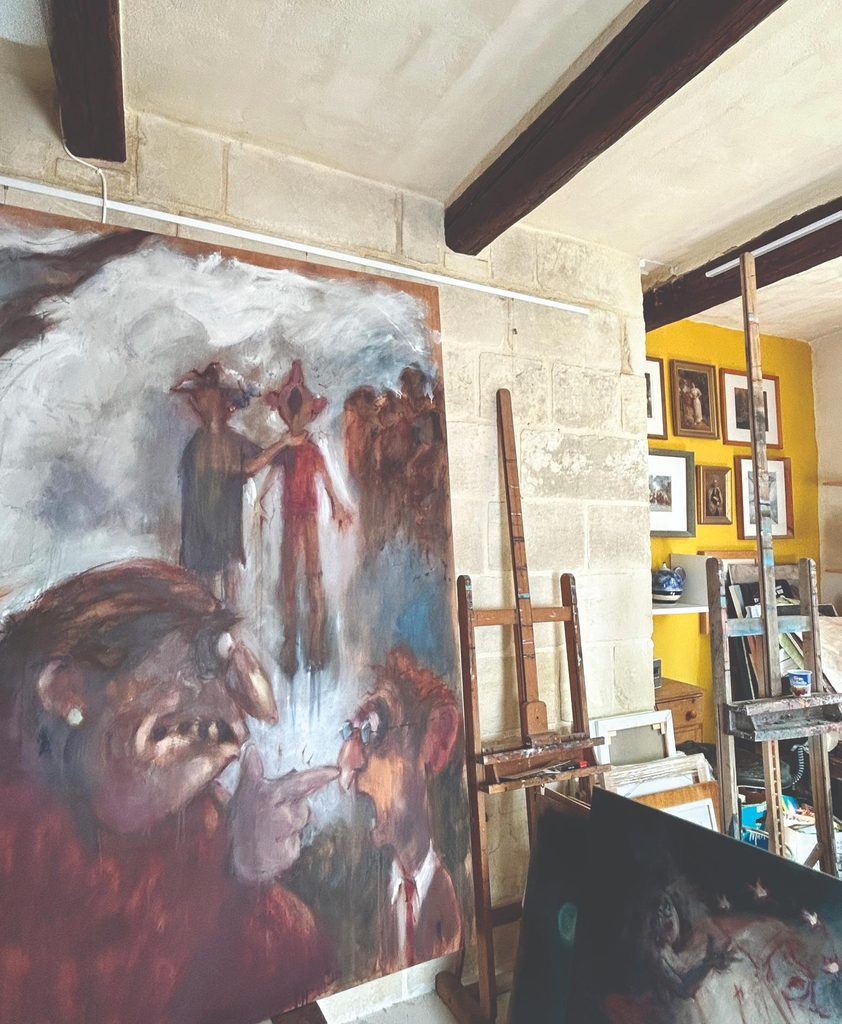
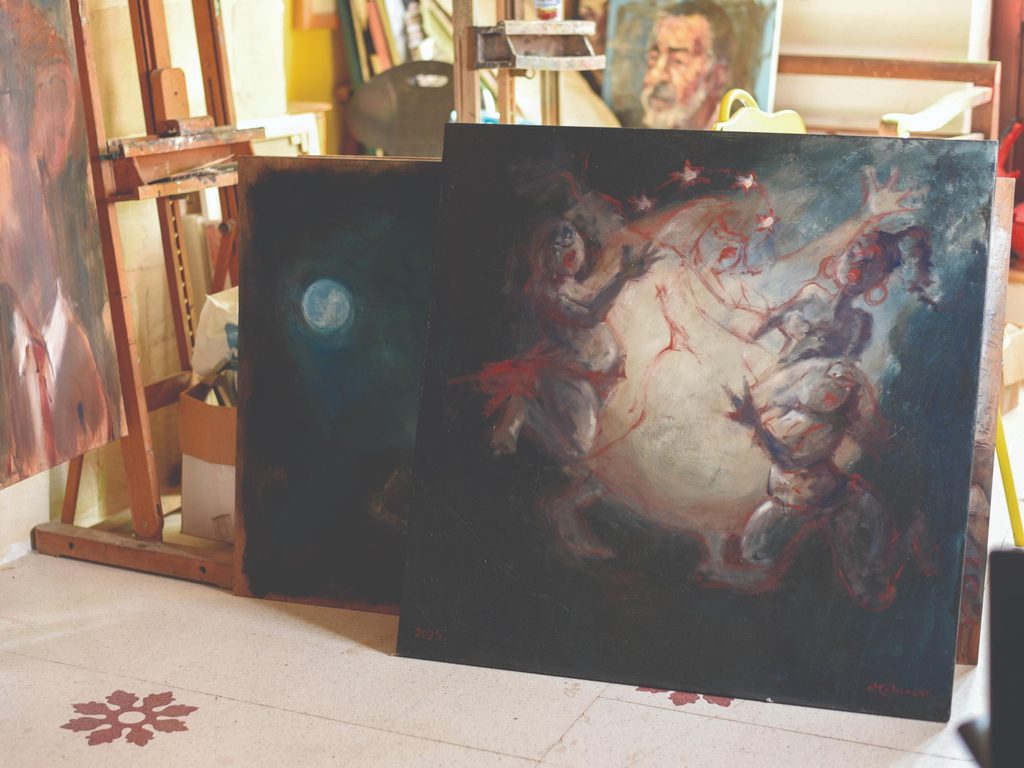
Caruana Dingli has been a prominent presence in the Maltese art scene for forty years, and her practice has long centred on the experience of being human. This new body of work, curated by Andrew Borg Wirth, marks a departure from the style she’s been recognised for, for over four decades: the colours are darker than her usual register, the mood more solemn. Each presented figure is shadowed by a guardian angel; not idealised, Adonis-like figures, but more humane companions, created to accompany the particular subject each one watches over. The illumination surrounding most of the depicted guardian angels gives the works a somewhat sacred presence.
Borg Wirth, when writing about the project, highlights how the underdogs “are rarely venerated for the resolve with which they transcend their position; instead, they are defined by what they are subjected to, rather than the spirit with which they endure.” Caruana Dingli doesn’t disregard hardship; she introduces the guardian angel, standing beside each figure, not to erase what the subject is enduring, but to insist that enduring is itself worth reverence. In this body of work, hardship does not define the subject. As she puts it, simply: “I tend to notice the underdog.”
Debbie has long returned to William Somerset Maugham, particularly as she is drawn to his habit of making the case for those rarely depicted or celebrated. This alignment is no coincidence. Debbie’s connection to Somerset Maugham began at a young age, and his words and characters have long influenced her practice. “He will very much look at a person in the background and write about their lives.” That same instinct now informs this body of work: the unsung figures others might overlook immediately capture Debbie’s attention.
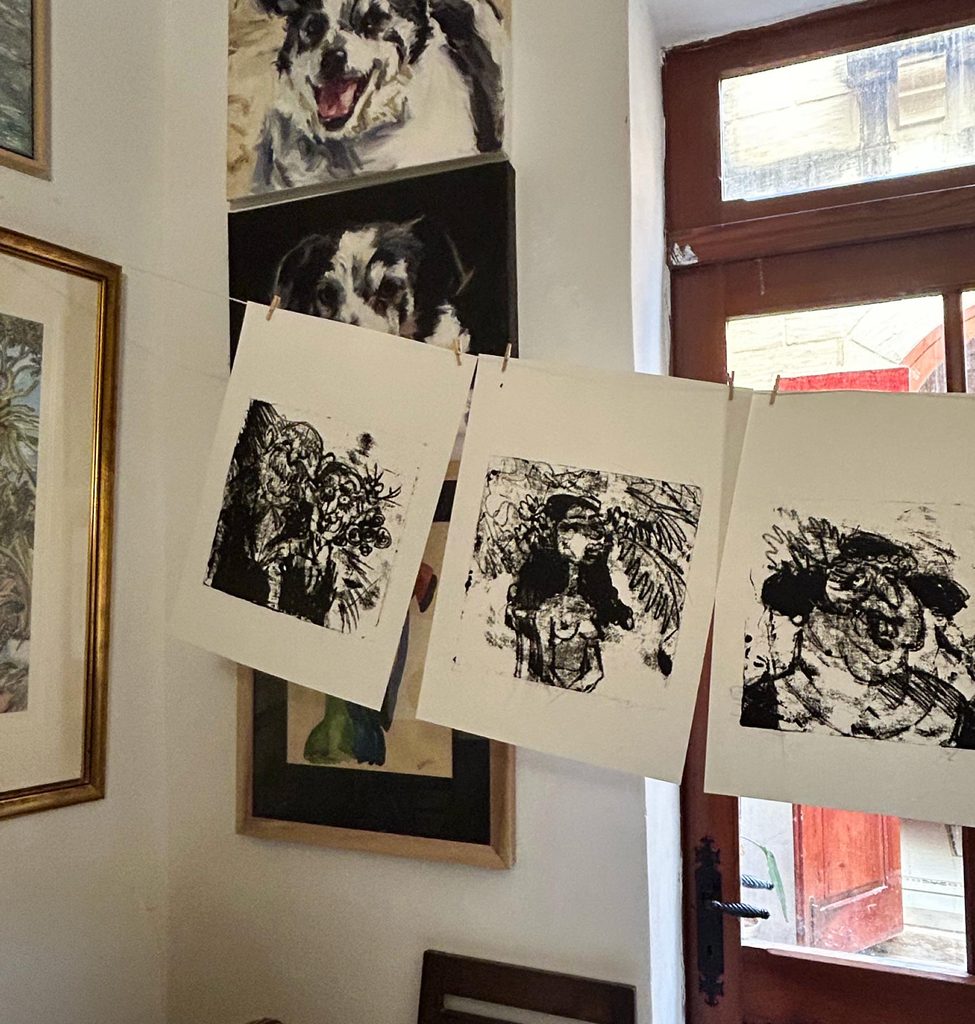
Alongside the nine large-scale paintings, Debbie is also presenting a series of monoprints showcasing some of Maugham’s characters across his novels. She has read his books countless times, and the abundance of monoprints which will be presented in this upcoming exhibition bears that out: each one reflects a close attention to what makes his characters who they are, such as the ‘Italian Countess,’ who is presented in the series of monoprints and, on closer reading, is neither Italian nor a countess.
While Maugham’s perspective and characters heavily influence her approach, her main subjects remain distinctly local. As Debbie puts it, “I can’t paint anything but Maltese people.” Works like The Golden Hour, a reflection on prayer which raises poignant questions about spirituality, and The Patron Saint of Girls Who Find Shitty Boyfriends hold difficult circumstances at arm’s length through humour. The abbozzo of Madonna tat-Triq addresses Malta’s pressures caused by overcrowding, using that same humour to make an uncomfortable social truth bearable enough to face. Humour, for Debbie, isn’t relief from the work; it just comes automatically. “Maybe humour can somehow draw an audience to a subject that I find significant enough to want to put out there”, she explains.
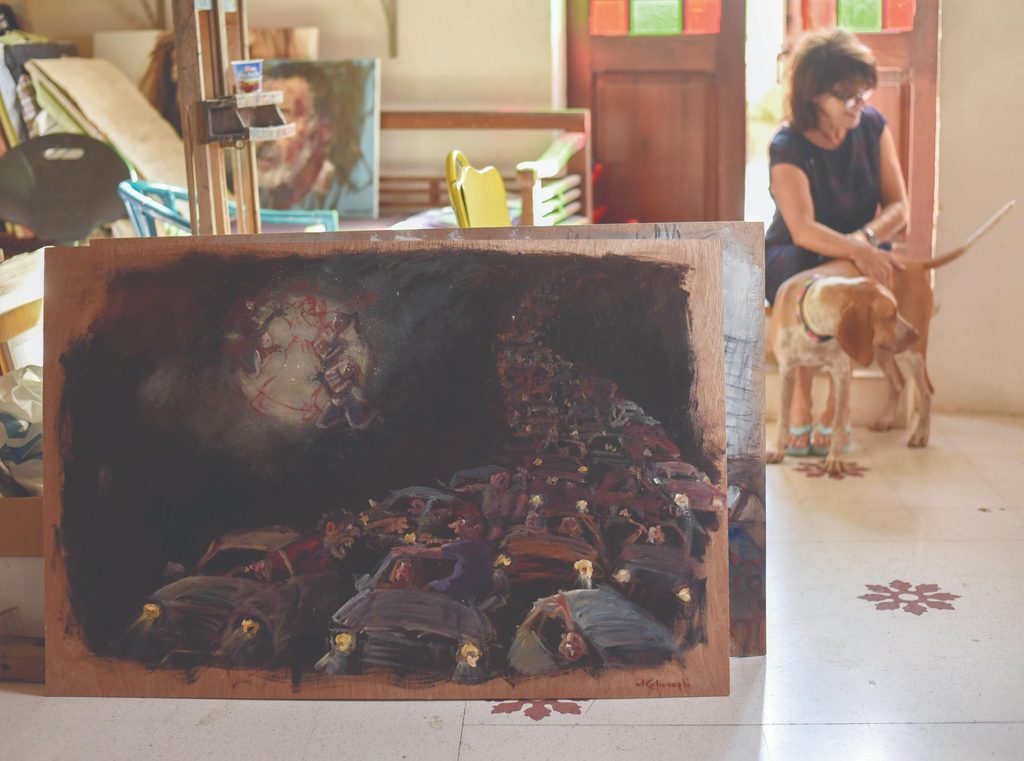
Debbie’s compassion, held together by wit, is what gives this series its particular tone, even as it can be perceived to be darker than her earlier work. It echoes Maugham’s own conviction, from The Summing Up (1938), that goodness is often found in “persons who by common standards would be relentlessly condemned.” Caruana Dingli’s nine works make the same argument in paint: that empathy and dignity need not be reserved for those of scale or status; they can simply be given to whoever is looked at closely enough.
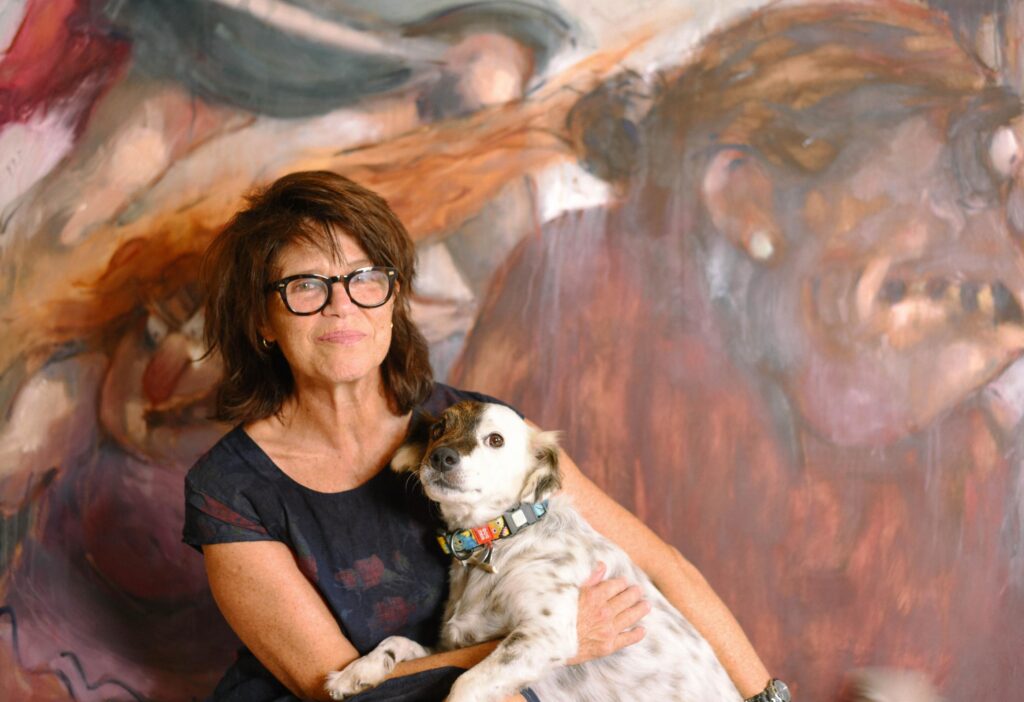
Of Human Bondage, Debbie Caruana Dingli’s solo exhibitions, curated by Andrew Borg Wirth, is on at Spazju Kreattiv from 6 November until 3 January 2027.