Persist Through the Noise
Impressions at the Venice Biennale D'Arte 2026
If I must die,
you must live
to tell my story
to sell my things
to buy a piece of cloth
and some strings,
(make it white with a long tail)
so that a child, somewhere in Gaza
while looking heaven in the eye
awaiting his dad who left in a blaze –
and bid no one farewell
not even to his flesh
not even to himself –
sees the kite, my kite you made, flying up above
and thinks for a moment an angel is there
bringing back love
If I must die
let it bring hope
let it be a tale
— If I must die, Refaat Alareer
My first encounter as I arrived at the Arsenale on my second day at the Venice Biennale, brought the experience before, and thereafter, into perspective. The poem If I must die by Palestinian poet, writer and activist Refaat Alareer is hopeful. He is dead, as is Koyo Kouoh, the curator of the biennale. His words are a premonition of the Israeli air strike which would kill him. Her imperative was to deliver quiet whispers. The world outside the venue’s doors is screaming.
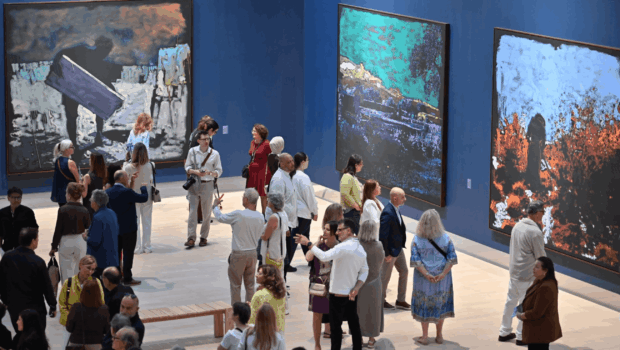
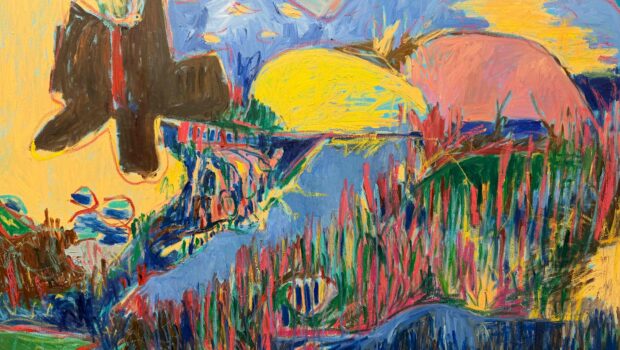
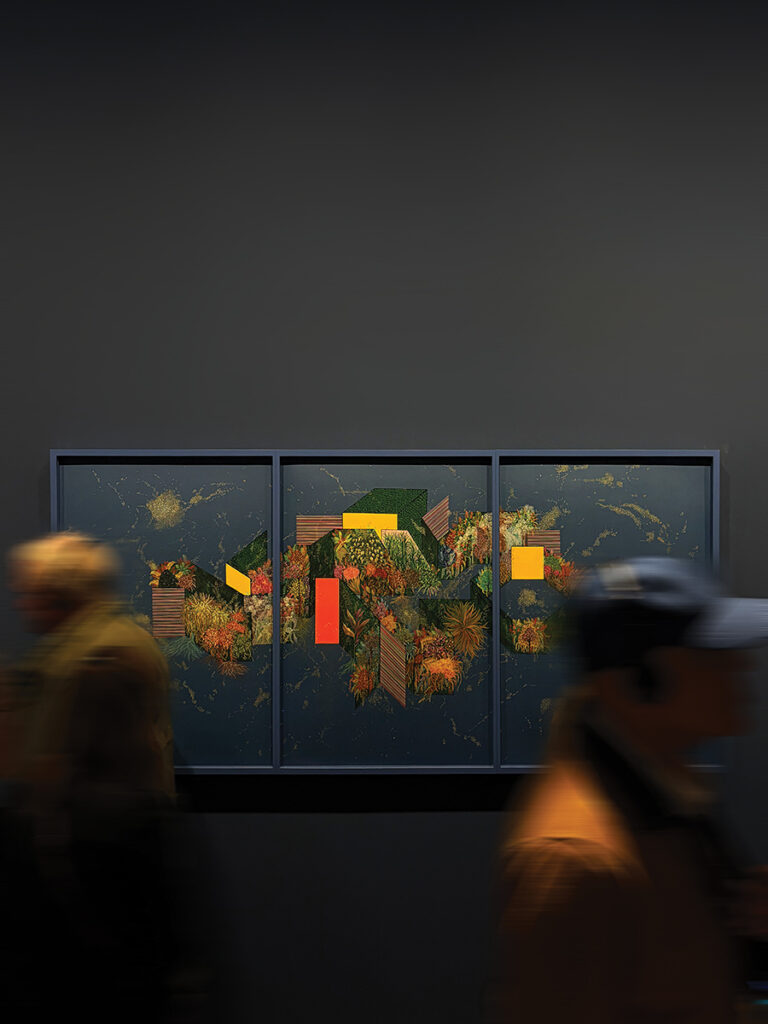
This is the climate of this biennial: quiet corners, louder pathways. Walking through the main exhibition at the Giardini, the curator’s plan, pursued by her chosen team, unfolds with people bustling across the rooms. The rain outside is drowning the pavilions, but the carefully chosen artworks invite contemplation, albeit amongst the noise of art buffs sheltering from the outside’s rain. Inside, I got lost in the beauty of some very different gardens within the work of Wardha Shabbir. The Pakistani artist creates geometric mazes of wild, beautiful and dangerous gardens. Her work is laborious but symbolic, painting hopeful pastures amidst a strained environmental, political and social backdrop. The very small whisper at the end of her brushstroke is a hopeful gesture which extends what Kouoh reads in Alareer’s poem.
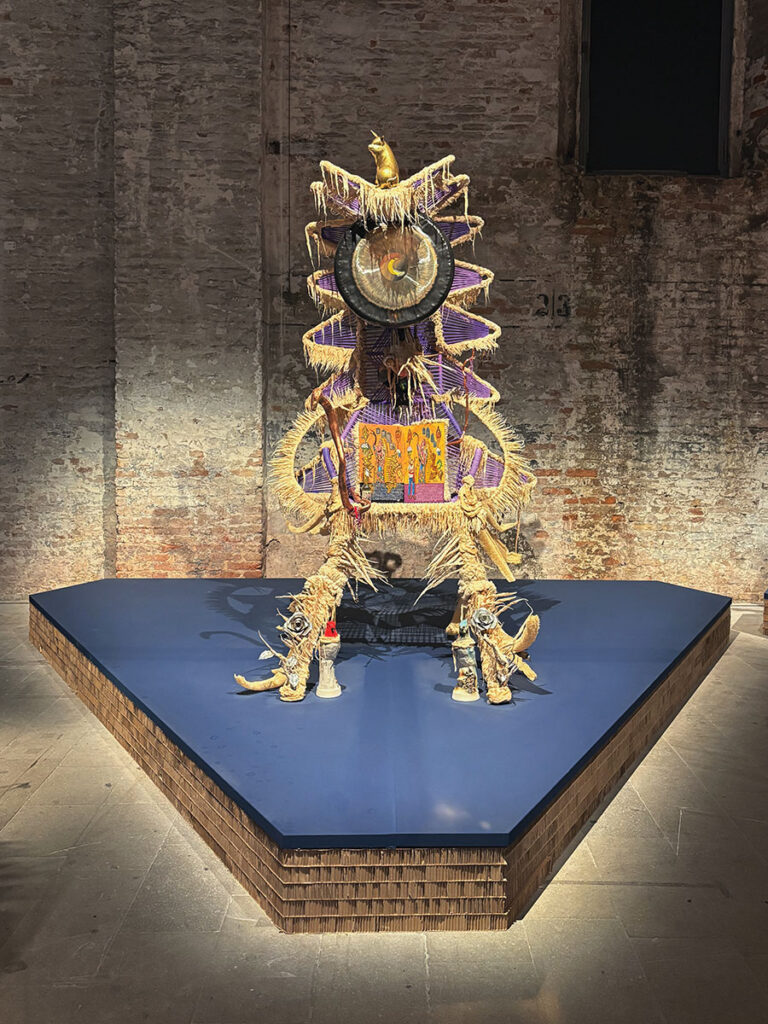
This exploration of poetry manifests in so many ways in the main exhibitions, beyond just the printed fragments penned across the world. In the Arsenale, the towering Disease Throwers of Guadalupe Maravilla are magnificent thrones of healing. Constructed with many carefully assembled pieces, including objects collected from a ritual of retracing the artist’s original migration route, the sculptures map the El Salvadorian artist’s personal geographies onto larger contemporary political realities.
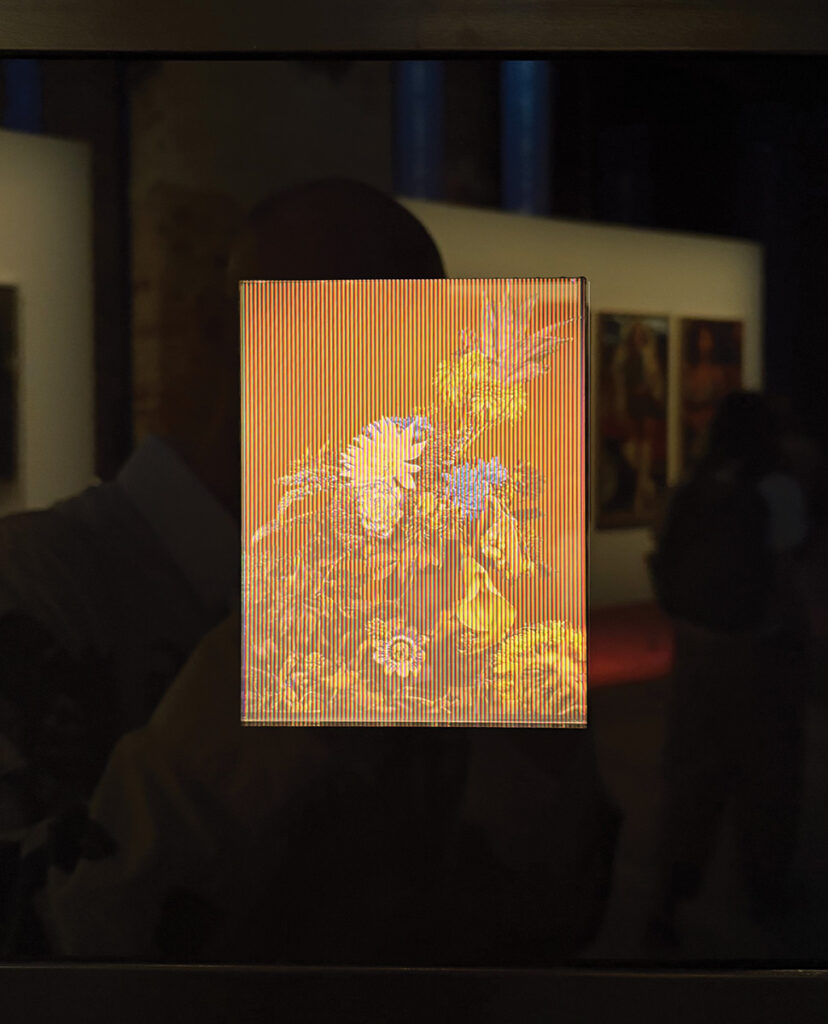
The series of Joly Screens by Dublin-based artist Alan Phelan revitalised a 19th century colour photography process, creating still lives embedded with memory. The LED panels, lit from behind, are ubiquitous. They are as much from 1894 – when the process was created by physicist John Joly—as they are from today. They chart the important political potential that floral still lives have held since times of empire, pursuing reflections of queer realities, and even using images by Steven Meisel for Jonathan Anderson in 2015, reinterpreting the work of legendary florist Constance Spry. They are labelled as being ‘counterfactual’ histories; notes for all of us on what could have been.
Time Capsules by Joana Hadjithomas and Khalil Joreige toe the line between nature and culture, showing geological excavations which expose the impact that humans have upon the land. Core samples collected from construction sites in Beirut, Athens and Paris work as storytelling vessels which expose hidden stories of human activity. It shows the immense archive that lies beneath our feet, uncovering layers that have been erased and operating at the cusp between moments of clarity and blurred disfigurations of memory. Poetry in this biennial is a constant dance between truth and fiction.
The quieter moments are what remain with you after a chaotic week in Venice. The turbulence of the whole experience must mean that the curator saw poetry in more places than most would. So, whilst In Minor Keys does not immediately feel like a silent whisper, the noise actually becomes the point. The curator invites us to dive deep and hear the sounds being drowned out. She creates shared territory for layered voices from across the world, attempting to challenge the wider zeitgeist of loud statements and tense politics. The biennale for which she chose Alareer’s poem, would become the biennale when artworkers held a historic 24-hour strike – the first in its history – amid a worsening genocide in Gaza, the one where e-flux announced the resignation of the international jury, and the police would push back on Pussy Riot’s protest-performance at the threshold of the Russian pavilion. Nothing about this felt minor.
—
At the start of the Arsenale exhibition, the biennial teases an image of the world as an archipelago of islands. Following, no doubt, in the thinking of Martinican philosopher Édouard Glissant, the curatorial team speaks of “convivial universes that refresh and sustain”. Painting visual images through the mention of “oases, gardens, courtyards, compounds, lofts and dance floors”, we understand that what Kouoh wanted more than ever is to take us where the cacophony is; to focus on the undercurrents in a world consumed by metanarratives, but to do this from the centre and not the periphery; to be in Venice but celebrate with voices from everywhere. This pedagogy – which, at times, can be hard to decipher, and may appear cluttered and convoluted – considers a worldly, rather than a continental gaze. It approaches from the South, rather from the West. It could be seen as a reading of Glissant’s mondialité, which understands the world as a tapestry which needs threads from everywhere to remain preserved and unfrayed. His is an argument for dialogue which challenges erasure.
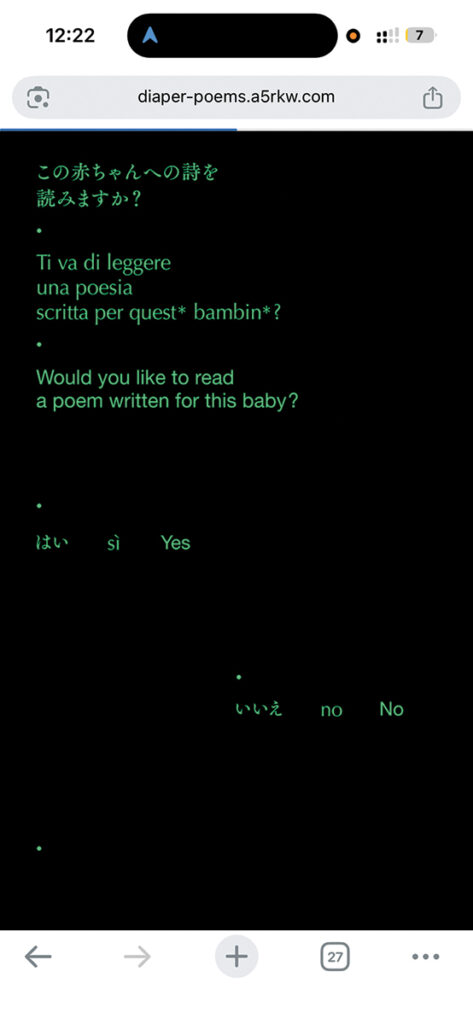
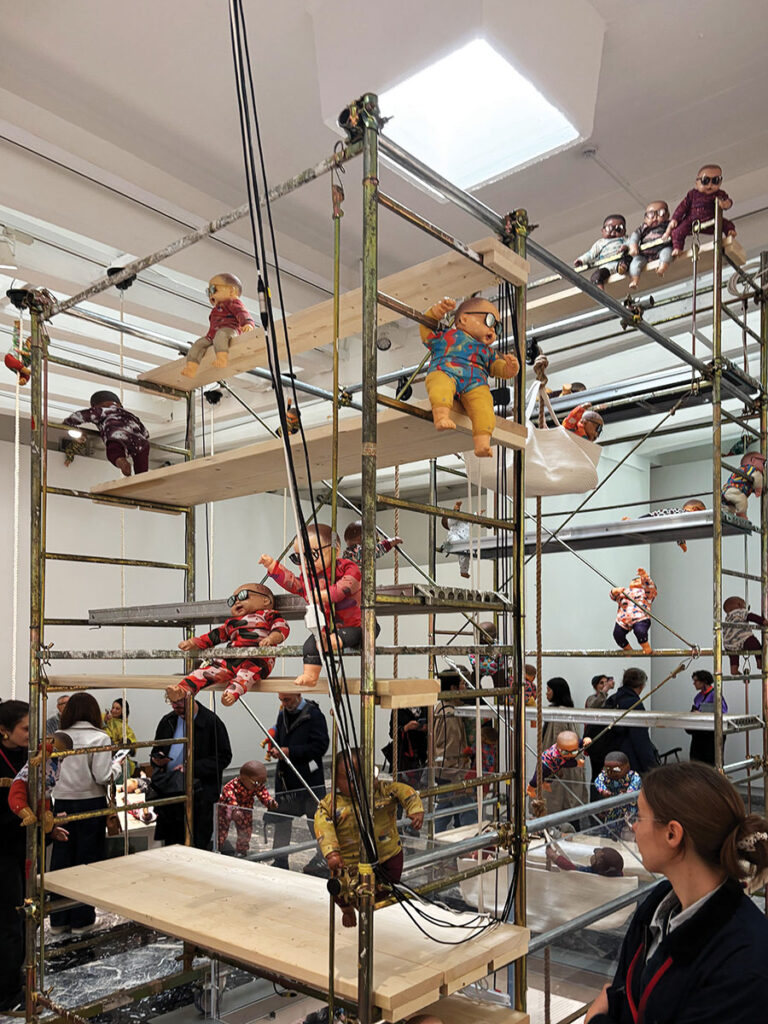
This is in direct contrast with the long-contested method of nationalistic pavilions which one encounters after walking through the curator’s main exhibits. The most ‘minor’ experience was most definitely the encounter which the Japanese pavilion offered. In the simplest—but admittedly bizarre—installation, everyone stood carrying a life-size, and realistically-weighing doll of a baby. QR codes linking visitors to fragments of poetry were revealed when undressing the dolls on nappy changers upstairs. The artwork was conceived after the artist, Ei Arakawa-Nash, and his husband, became fathers to twins. In a gesture which transcends language, Grass Babies, Moon Babies was an experience of care, an investigation of parenthood, an encounter with queerness and a performance from within a theatre of the absurd. It had a lot to say about the world which we live in, as strangers held plastic babies in a joint performance of prosthetic intimacy.
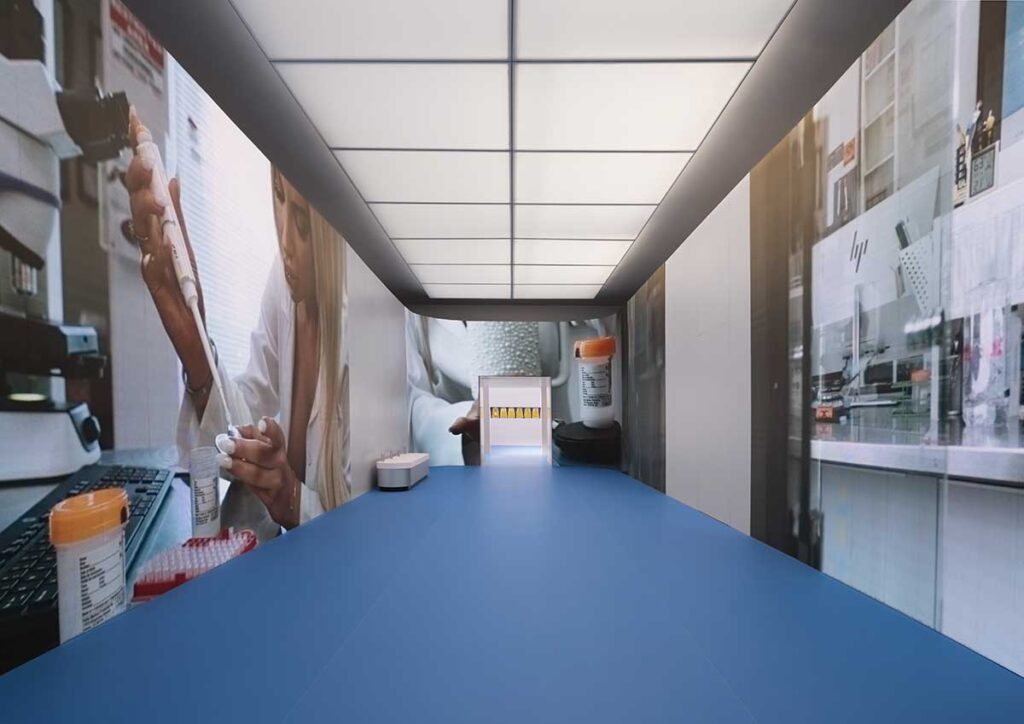
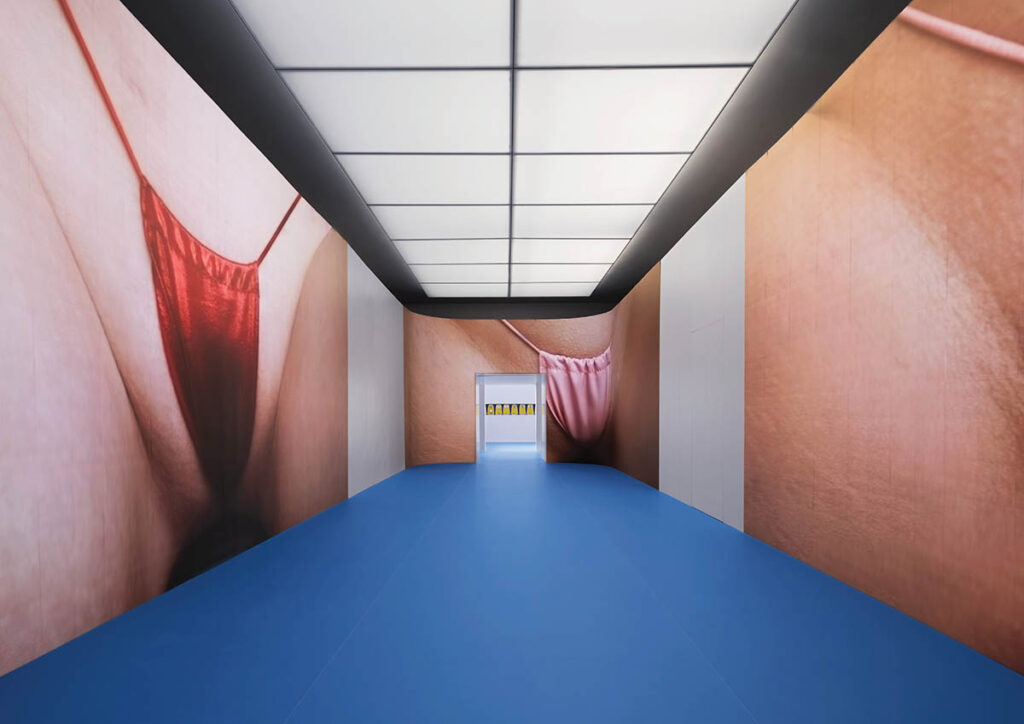
At the flipside of this tactile artwork, the Danish pavilion positions audiences into a massive film installation which speculates on a pornographic gaze in light of a global fertility crisis. Curated by Chus Martinez, Things to Come by Maja Malou Lyse is staged within a sperm bank in 2045. As you stand in the space, it is again familiar, but absurd, in a completely different – but similar – way to Arakawa-Nash’s work. In parallel to the pavilion’s launch, an event called Cicciolina’s Dream was held in collaboration with the Italian pornstar and politician.
In artworks calling for a collective radical rethinking of social structures and hierarchies, these pavilions were a direct, performative confrontation in comparison to Kouoh’s attempts at sottovoce. The loudest and most provocative of them all came in the Austrian pavilion, the images of which everyone in and out of the art world has seen. The now much-shared bell performance outside was just one of a number of different performative actions on the inside. The urgency of this pavilion really made its intentions clear: we live at a time of great crises and sounding the alarm is no longer enough.
In contrast, the Spanish pavilion, with an artwork by Oriol Vilanova felt like a welcome extension of Kouoh’s curatorial attempt. Featuring walls of forgotten postcards, arranged to systematically create swathes of colour, the pavilion was a soothing contemplation on the power of images. In recalling the old act of sending postcards, and the timeless behaviour of collecting and hoarding, the pavilion is a strong gesture. In a fever dream packed with politically explicit work, this had the implicit poetry that the biennial promised.
In the Arsenale, and after exploring for two days, I am reminded when visiting Malta’s pavilion, that the island is microcosmic. In No Time to Sparkle, the absurdity, political complexity and memory-stricken malaise explored throughout other pavilions, face each other off in three works by Charlie Cauchi, Adrian Abela and Raphael Vella. A massive couch invites you to a moment of slumber curated by Margerita Pulè, as moments of spectacle, protest and coinage offer departure points to explore contemporary Malteseness.
—
If poetry is what Koyo Kouoh set out to give us, the boldest experience of it lay outside of both the Arsenale and Giardini. The ear is the eye to the soul—the Holy See Pavilion curated by Hans Ulrich Obrist and Ben Vickers—moved you through a series of islands within the Mystical Garden of Carmelitani Scalzi. Proposing a sonic lament, piecing together a soundscape with the help of 24 poets and musicians including Patti Smith, FKA Twigs, Brian Eno and Moor Mother, the pavilion is sublime. It forces you to slow down; makes nature talk to technology and establishes relationships you wouldn’t expect to come by. In a biennial overwhelmed with visual stimulation, it is radical to propose listening as the primary act.
Alareer’s kite hangs over the whole experience. Koyo Kouoh, through the artists she invited and poets she cited, is adamant in her assessment: persist through the noise.