NOTHING PRECIOUS: PRECIOUS NOTHING
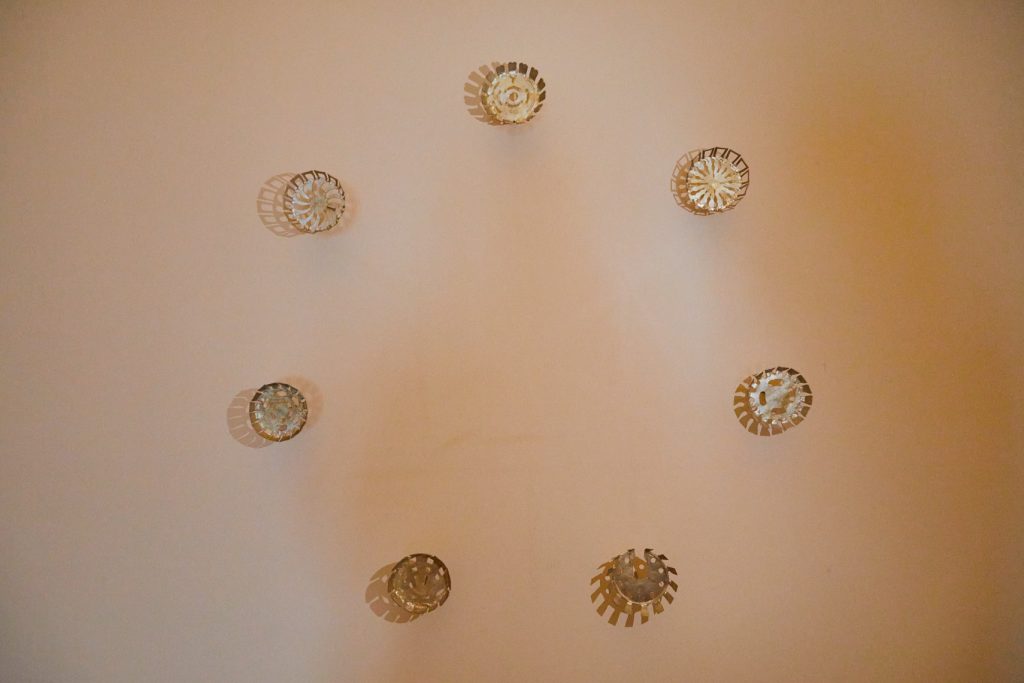
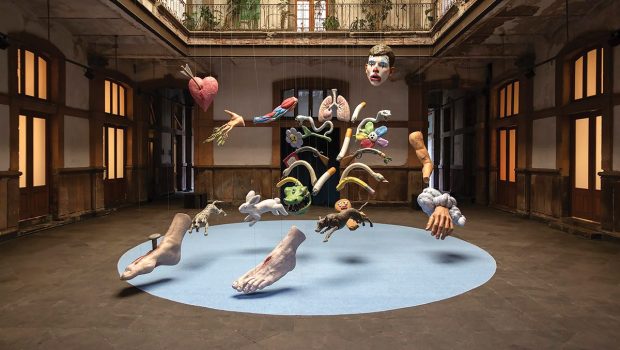
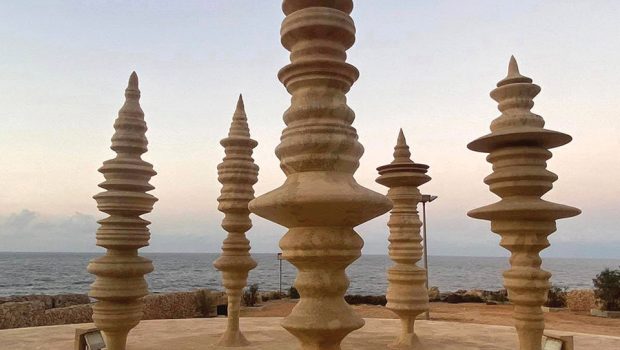
Uzbekistan cotton collars hanging like emptied chandeliers, marble towers propping Budweiser packs.
A duo show by Aziza Shaden and Luca Resta, Nothing Precious: Precious Nothing unfolds as an essay on value – or rather, a tentative approach to what value does before it stabilises into language, systems of valuation, or institutional recognition. Not value as property, but value as circulation. As rumour. As attribution. As something that gathers around objects almost accidentally.
The exhibition departs from what Vladimir Jankélévitch calls “almost nothing” – that infra-thin interval where meaning neither disappears nor fully appears. A suspended state where the precious and the negligible hesitate to separate. Here, value flickers, never fully secured, passing through objects without entirely belonging to them.
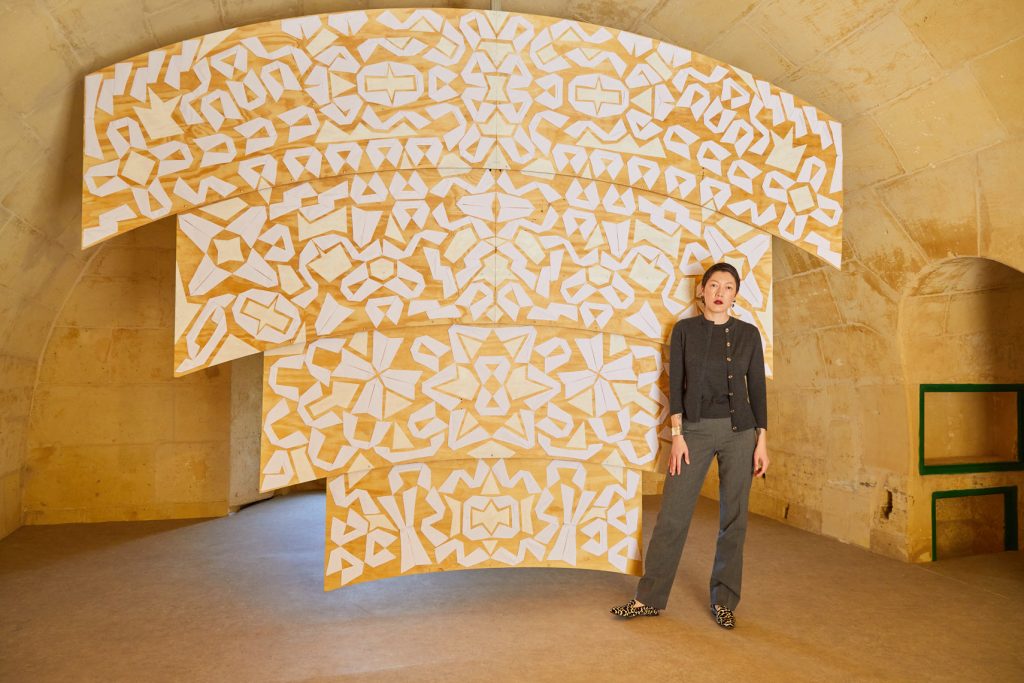
Under exhibitionary conditions, waste becomes form.
Aziza Shaden presents a site-specific hanging sculpture composed of white cotton collars produced in Uzbekistan. Its framing recalls the silhouette of a chandelier – an object long associated with aspiration in post-Soviet domestic interiors, especially working-class ones. Here, that symbol of elevation is quietly displaced, refracted through a theatre of the absurd. It becomes repetitive, excessive, slightly hollow. The work approaches cotton not simply as textile but as geopolitical residue, carrying the memory of an extractive modernity that reshaped land and bodies. In Central Asia, industrial cotton cultivation contributed to the Aral Sea’s slow exhaustion, turning a living ecosystem into an administrated landscape. Shaden’s gesture tentatively reassembles this trajectory: land becomes fibre, fibre garment, garment circulation, circulation surplus, surplus waste. Under exhibitionary conditions, waste becomes form.
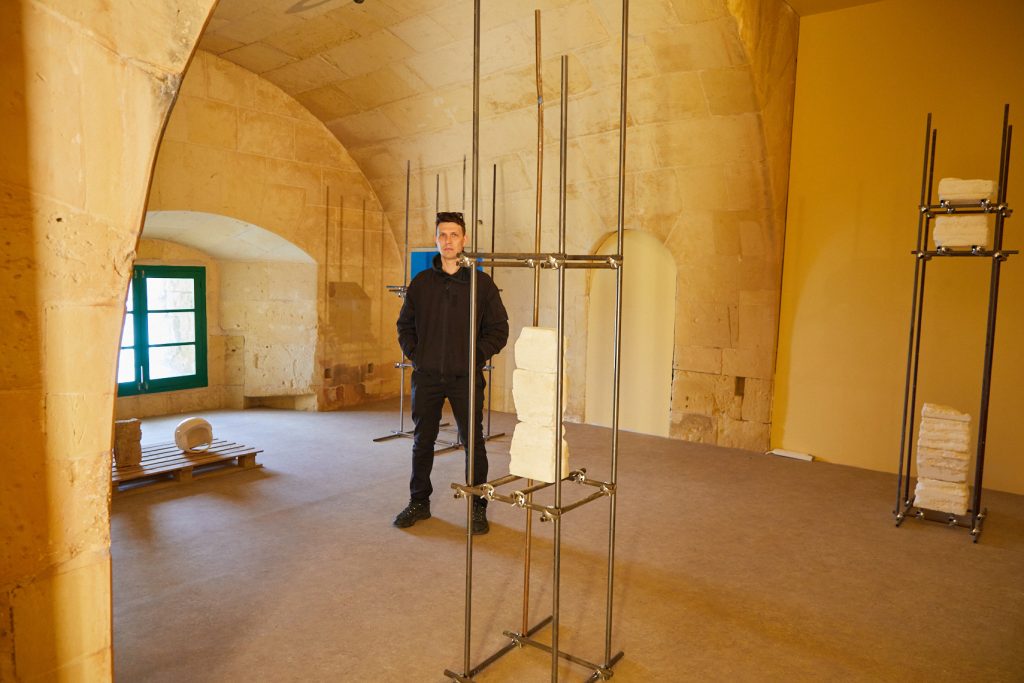
A cardboard pack shifts, almost imperceptibly, toward relic status.
Luca Resta approaches value through a sculptural proposition that is both playful and exacting. Marble towers recalling Brâncuși’s modernist aspirations support stacked packs of Budweiser. Permanence and disposability enter proximity without resolving their contradiction. Marble – historically bound to commemoration – carries the weight of standardised consumption. The beer pack, designed for rapid disappearance, acquires temporary monumentality. Resta’s gesture does not monumentalise the commodity; it tests the threshold where logistics begins to resemble ritual. A cardboard pack shifts, almost imperceptibly, toward relic status.
Across both practices, possession appears as fiction performed through institutional rites: transport, insurance, storage, condition reports, installation protocols. The object accrues value through largely invisible procedures. What seems autonomous is sustained by infrastructures as administrative as they are symbolic – a network of gestures sanctifying matter while claiming neutrality.
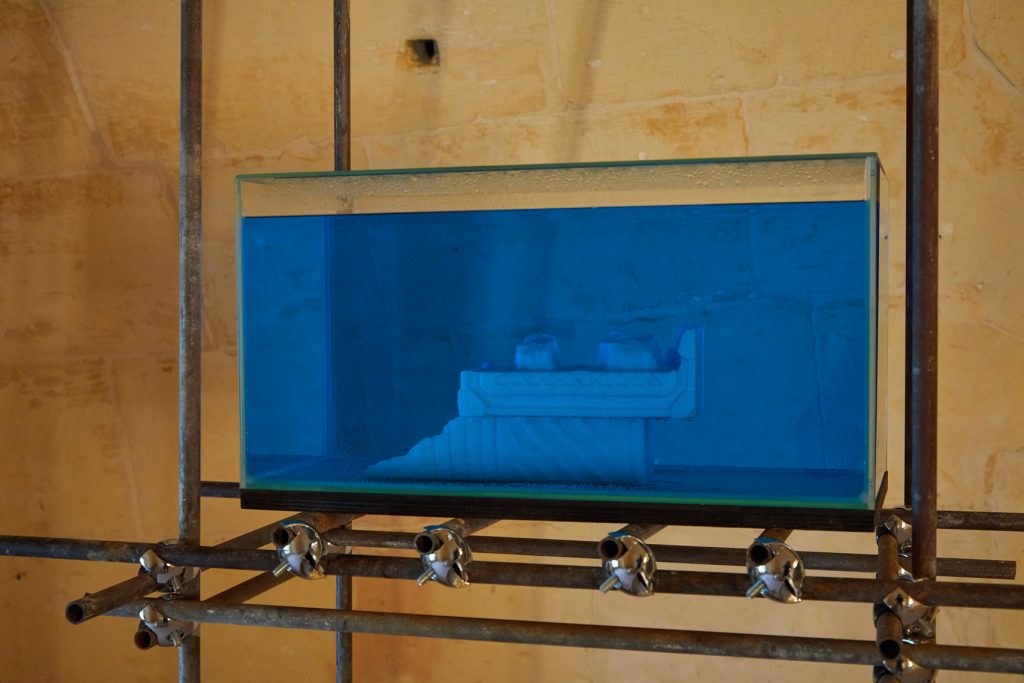
Installed in the Sea Pavilion and extending across Valletta, the exhibition meditates on fluctuation – not only economic, but ontological. Objects shift statuses: waste nears relics, humour grief. Cotton fibres, plastic bottles, marble strata, migratory birds. Each participates in a landscape where preservation feels provisional.
Perhaps a preliminary attempt to consider holding, attributing value, preserving – at a moment when the sea itself witnesses and measures. Not metaphor, but surrounding condition. In that proximity, the distinction between precious and almost-nothing does not collapse. It trembles.
Text: Azad Asifovich & Vlad Sludskiy