CLEAN | CLEAR | CUT
Interview | Rosa Martínez | Malta Biennale 2026
Renowned for her incisive, site-responsive approach and her ability to weave global artistic languages into meaningful local dialogues, Rosa Martínez stands among the most influential curators working today. With a career spanning more than three decades – and landmark roles at the Venice, Istanbul, São Paulo, Busan, SITE Santa Fe, and Limerick biennales – she has consistently reshaped how international exhibitions interpret place, politics, and contemporary culture.
In this conversation, she reflects on the experiences that have defined her curatorial practice, from navigating the geopolitical charge of Istanbul to the intellectual rigor of Venice. She discusses the responsibilities of creating intergenerational and cross-cultural dialogues, the evolving role of the curator in interpreting the spirit of a place, and the delicate balance between global relevance and local engagement.
As she leads the upcoming Malta Biennale 2026 as Artistic Director and Curator, Martínez offers insight into the conceptual framework guiding the edition — CLEAN | CLEAR | CUT — and explores how Malta’s complex heritage, Mediterranean geography, and contemporary tensions are shaping a transformative programme.
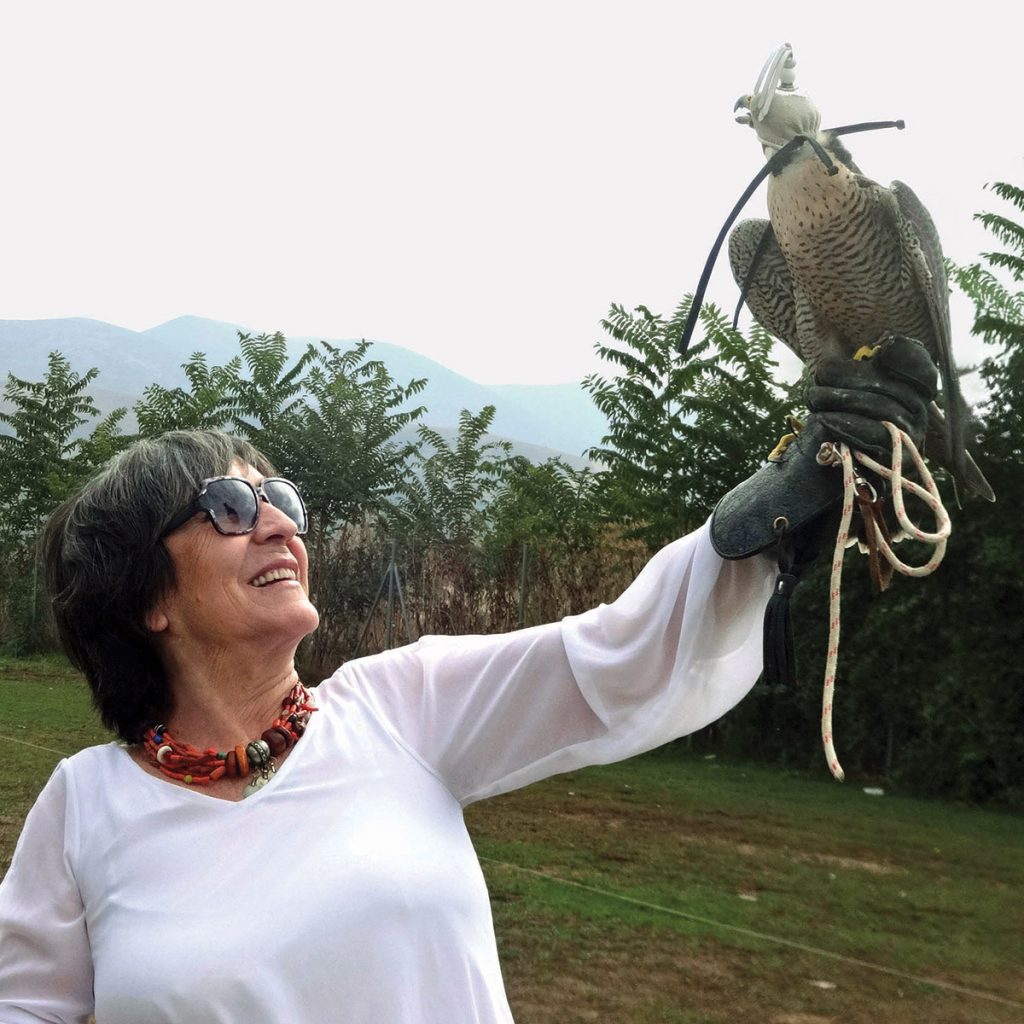
“The fundamental objective is to create dialogues between the local and global scenes always keeping in mind the need to create a meaningful interpretation of the zeitgeist, the spirit of the time.”
You’ve curated some of the world’s most influential biennales, from Venice to Busan in Korea, from Istanbul to SITE Santa Fe in New Mexico (USA), from Sao Paulo to a small city like Limerick in Ireland. Looking back, which experiences most shaped your curatorial approach and how?
Each biennial has increased my awareness of the role that curatorship should play in interpreting the time and place in which an exhibition is presented, together with the power an exhibition might have to contribute to increase or change the meaning of a place. With the perspective of more than three decades of experience, curating sometimes alone and sometimes collectively, I can see how each type of authorship allows you to develop different skills and qualities. When curating in a group you learn to collaborate and make democratic agreements. Curating alone allows you to be the main channel for articulating the artistic and political energies that surround you.
I would say the biggest challenge in my career happened in 1997 when I was invited to curate the 5th Istanbul Biennial alone. I had the chance to use amazing historical spaces like the Yerebatan Cistern, parts of the Topkapi Palace and also civil places like the international airport or the train stations in the European and the Asian side of the city. As there was not much funding for research trips, I had advisors worldwide who were sending artist dossiers from different parts of the world. I made my own choices after receiving the qualified suggestions of people who knew well their local landscapes. And my choices were highly relevant for that place and time.
On another note, I can say that curating an event with global ambitions and a century-long history, such as the Venice Biennale, is not the same as curating a young and emerging biennial such as the one I am now organising in Malta – just to mention two places I love very much. In Venice, the focus is on showcasing the most relevant international artistic languages, knowing that the event will be judged by leading international experts and that its contribution to contemporary aesthetic and political thought will have worldwide resonance. In Istanbul, Santa Fe in New Mexico, Pusan, Limerick or Malta, the fundamental objective is to create dialogues between the local and global scenes always keeping in mind the need to create a meaningful interpretation of the zeitgeist, the spirit of the time. The possibility of creating those dialogues in close connection with the cultural heritage of a place is an enormous challenge – yet one of considerable satisfaction. This great intellectual, political and aesthetic excitement is a gift I have been able to enjoy through my many opportunities to work on site-specific events and exhibitions.
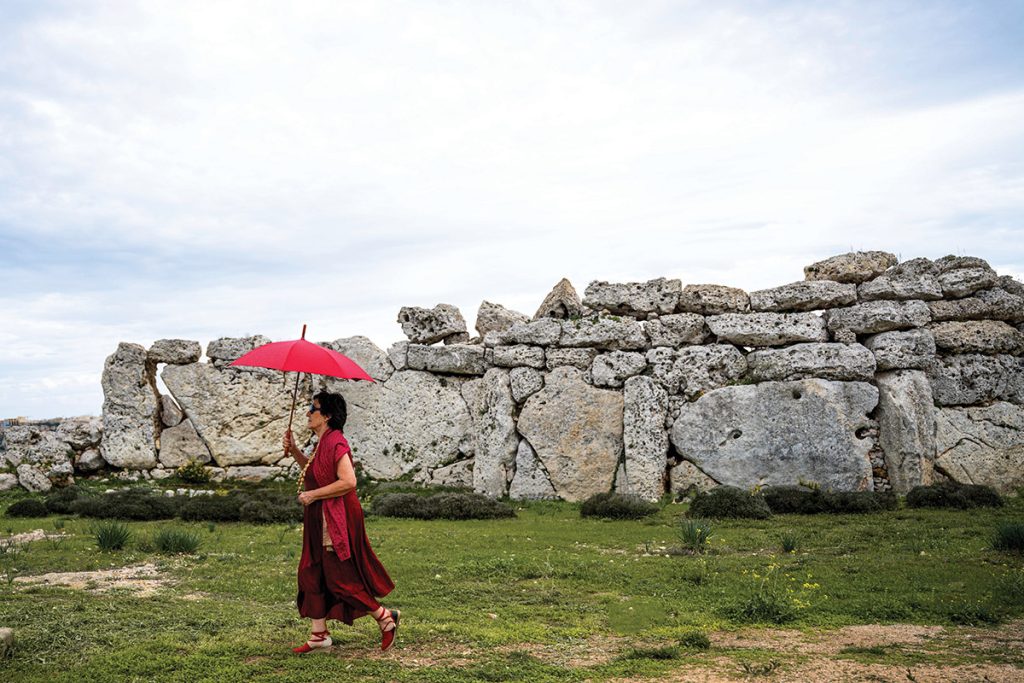
“CLEAN | CLEAR | CUT.” These three verbs are not just a motto, but rather a call to action. Clean means purging the environmental, ethical, and aesthetic toxicity that saturates so much of our contemporary discourse. Clear is about discerning and making sense of what matters, cutting through superficial repetition. And Cut is about disruption: opening new paths, breaking away from the expected, and redefining our dialogue with history and heritage.
Across your international career, you’ve worked with both established names and emerging voices. How do you balance these perspectives when developing a biennale’s narrative?
Each biennial has increased my belief that it is the curator´s duty to create intergenerational and cross-cultural dialogues that erase the boundaries that separate nations, that question the rigid aesthetic taxonomies established by the canon. Trying to dismantle the hierarchies that categorise artists by gender, national origin or other attributes helps dissolving cultural stereotypes and opens new paths for creativity. ‘La bella combinazione,’ of mixing emerging and established artists is a fruitful strategy in both directions. Younger artists can learn from their elders and the established ones can feel relevant and connected to new developments in contemporary art.
Biennales often reflect not just art, but the cultural and political climate of their host country. How has your past experience prepared you for curating within Malta’s unique cultural landscape?
In Malta, I feel the strong desire of the country to open up to the world, to go beyond the isolation that islands, or in this case a tiny archipelago, has experienced. Malta is a fascinating place where the richness of its prehistoric past, its amazing cultural heritage and its deep connection to Catholicism meets with crazy urban speculation and the wildest trends of global capitalism.
Malta Biennale 2026 positions you as both Artistic Director and Curator. What core vision or conceptual framework is guiding your approach to this edition?
My guiding vision for the 2026 Biennale is embodied in the title “CLEAN | CLEAR | CUT.” These three verbs are not just a motto, but rather a call to action. Clean means purging the environmental, ethical, and aesthetic toxicity that saturates so much of our contemporary discourse. Clear is about discerning and making sense of what matters, cutting through superficial repetition. And Cut is about disruption: opening new paths, breaking away from the expected, and redefining our dialogue with history and heritage.
In curating this edition, I’m seeking work of genuine quality – not trendy or decorative art, but proposals that reflect critical depth, innovation, and honesty. I want this Biennale to be transformative: to engage with the layered past of Malta, to analyse power and ideology, and to imagine new futures resonant with beauty and critical awareness.
What aspects of Malta—its history, geography, or contemporary context—are proving most inspiring or influential as you shape the 2026 programme?
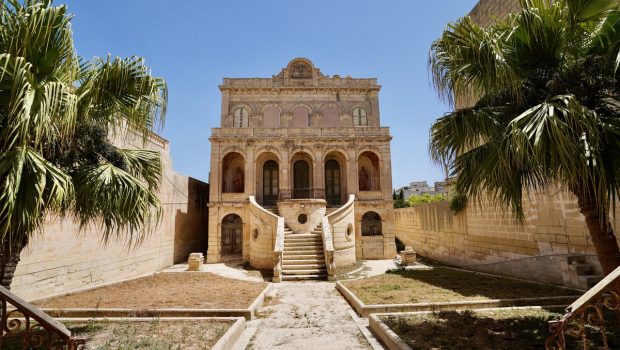
Malta is an extraordinary palimpsest: its stone is not just material, it embodies so many layers of memory. War, destruction, reconstruction, colonization, liberation…Its fortresses, palaces and the humble architecture of everyday life all tell stories of conquest, faith, resistance, and survival. The Maltese heritage sites are not neutral backdrops – they are actors in the dialogues between curatiorial visions and artistic proposals.
By anchoring artworks in Heritage Malta’s historic venues (megalithic temples, palaces and forts of the Knights, national museums) and collective urban spaces we connect the cultural weight of history with the urgency of the present. In the Inquisitor’s Palace, for instance, I wish to bring to light suppressed knowledge, crimes, punishment, and the tension of ideological power over certain beliefs and forms of wisdom that were not accepted within the Catholic orthodoxy. At the prehistoric temples, cosmic, fertility, and care narratives will evoke universal existential questions. At the Maritime Museum we will explore some of the tensions that unfold in international waters where the rules of local governments are suspended, and humanitarian laws should apply.
In fact, Malta’s position in the Mediterranean – a crossroads of politics, migration, colonial legacies, ecological tension and urban speculation- makes it a powerful lens through which we can explore global inequalities and propose long-lasting dialogues that should lead towards transforming of the uneven distribution of wealth and power.
Many biennales struggle to balance global relevance with local engagement. How do you plan to create opportunities for Maltese and Mediterranean artists while maintaining an international outlook?
One of the fundamental objectives of the Malta Biennale is to create a platform for local creators and art professionals. This is why my two curatorial assistants, Alexia Medici and Antoine Borg Micallef, are from Malta. In our continuous dialogues about the selection of artists and the connection of their projects to the narratives of Heritage Malta locations, they are giving shape to their own criteria. The conversations with local artists gives impulse to their creative potential and takes them beyond their familiar comfort zones. The choice of Maltese artists is not driven by an aim to report what is happening on the islands. I do not intend to describe the current landscape, but rather to contribute by adding new shape and form. And yes, the geographic and political placement of Malta in the Mediterranean is fuelling our desire to convert the archipelago into an artistic centre of gravity, an epicentre that attracts and expands the creativity of its surrounding countries.
As you look ahead to the opening of Malta Biennale 2026, what impact do you hope this edition will leave on both the local cultural ecosystem and the wider international art community?
My hope is that this Biennale becomes a catalyst – not only an exhibition, but an experience that resonates intellectually, emotionally, and socially both for the local audience and for international visitors. For Malta, I would like this edition to strengthen a cultural ecosystem that is already vibrant yet still evolving: to empower local artists, curators, and institutions by placing them in dialogue with international voices, and to foster a sense of pride in the island’s extraordinary heritage. Malta deserves to be seen not as a peripheral location, but as a cultural centre where urgent global questions can be critically explored with clarity and sensitivity.