MICAS. BEYOND THE BASTIONS
A new publication and an exhibition delve into the history of the project and its context.
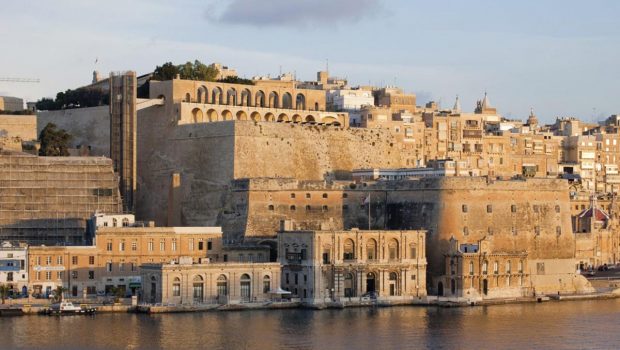
What does respecting the genius loci mean? How does one define genius loci in the first place? Amidst the current crisis of what we thought were fundamental and unquestionable European values, such as authenticity or ethical rigour, outlining what constitutes the genius loci (the spirit of a place), presents itself as a challenging task – one which most architects have to manage recurrently and, increasingly more often, quite reluctantly too. In this regard, the project of Florence-based architecture firm Ipostudio together with the Restoration and Preservation Department for the new Malta International Contemporary Art Space (MICAS) comes to rescue with its respectful yet daring approach to the fortified landscape of Floriana.
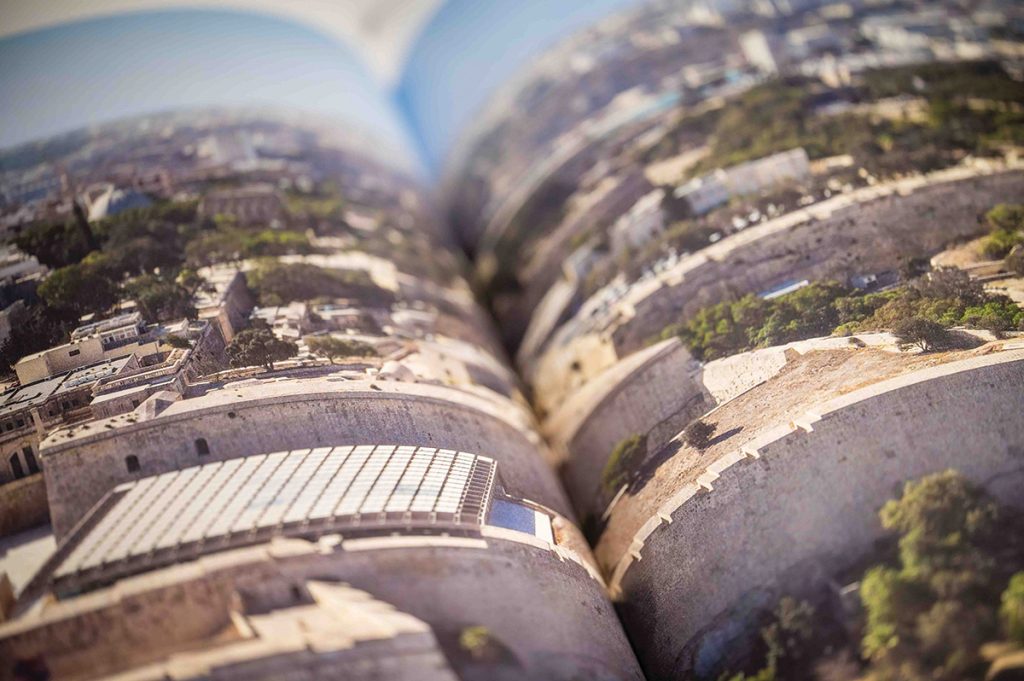
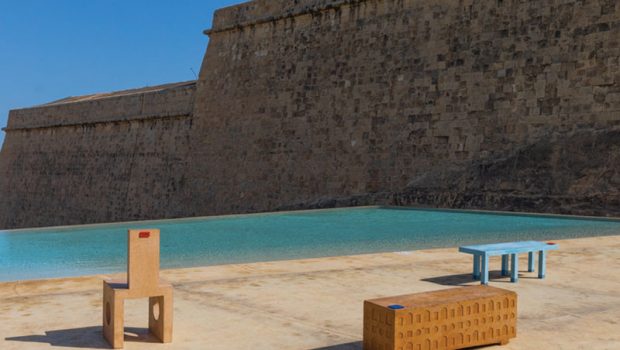
Thanks to a deep, layered and original appreciation of the 17th century bastions and of the Ospizio complex, the architects successfully shaped the vision of the newly founded cultural institution, repurposing the historical structures without inhibitions. The project for the new museum allows visitors to move freely within the space, embracing its complex layering and at times almost paradoxical atmosphere: carefully restored stones that were once serving military purposes are now the unusual backdrop to contemporary art pieces, protected by an imposing new roofing structure reminiscent of complex machines but simple in its modularity.
The design of the contemporary additions emphasises the monumentality of the existing structures while allowing curators, artists and visitors alike to be playful within them: exploring them, observing them from uncommon perspectives, occasionally disregarding them in favour of a large-scale artwork or the cocooning atmosphere generated by one of those omnipresent open white cubes hosting visual art exhibitions. In all instances, the project works.
In his role as curator of the ongoing exhibition “MICAS. Beyond the Bastions” and contributor to the publication by the same name, Konrad Buhagiar traced the centuries-long history of architectural transformation focusing on how the convergence of past and present creates a dialogue between preservation and innovation, memory and reinvention, in line with the Italian school of thought of the so-called restauro critico, which defines restoration as the critical, methodological moment in which the work of art or architecture is recognized in its physical consistency, its dual aesthetic and historical polarity, with the aim of injecting new life into it and therefore projecting it into the future.
This approach to architectural interventions in historical environments has positively influenced more than one generation of professionals in the field and enabled what the MICAS vice-chairperson Dr Georgina Portelli defined as ‘a case study in contemporary practice where Maltese heritage was engaged without nostalgia, and how architecture, curatorship, ecology, and place came together to form Malta’s home for international contemporary art’. At the event marking the MICAS book earlier in February, she added that ‘the essays and visual material brought together reflect MICAS’s development as a hybrid institution. The museum is not only a destination for exhibitions, but a platform for artistic production, education, and public engagement”. On the same occasion, MICAS Executive Chairperson Phyllis Muscat spoke about the publication as a testament to the transformative power of architecture and to the resolve to build “an institution that re-energised the historic land on which it stands, a place once used for military defence, that is now a space for artistic encounter.”
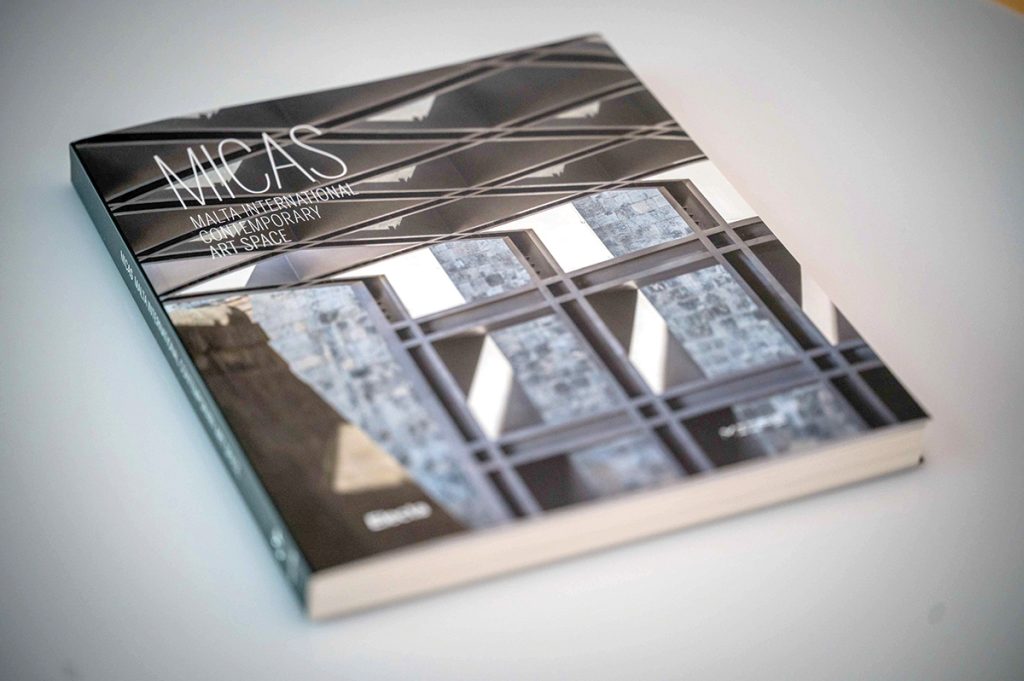
Published by Italian specialists in visual arts Electa, and edited by the architect and author Marco Mulazzani, the book carries a considered account of the museum as both an architectural transformation and an institutional proposition: a contemporary art space shaped by place, history, and public ambition. Similarly, the exhibition presents a comprehensive narrative of the design, restoration, and construction processes adopted in the recent phase of transformation, combining different media and providing an insight into the rich archival material which informed the project and into the approach which made it a best practice for conserving and enhancing its genius loci –spirit of the place and exceptional source of authenticity.
MICAS. Beyond the Bastions will be open until June 2026. The galleries are open from Tuesday to Sunday, with free entrance every Sunday and a free tour of the exhibitions on offer at 11am.