No Need to Sparkle.
Experiments in Love and Revolution. And in how to doubt well.
Erica Giusta in conversation with the team behind the Malta Pavilion at the 61st Esposizione Internazionale d’Arte della Biennale di Venezia.
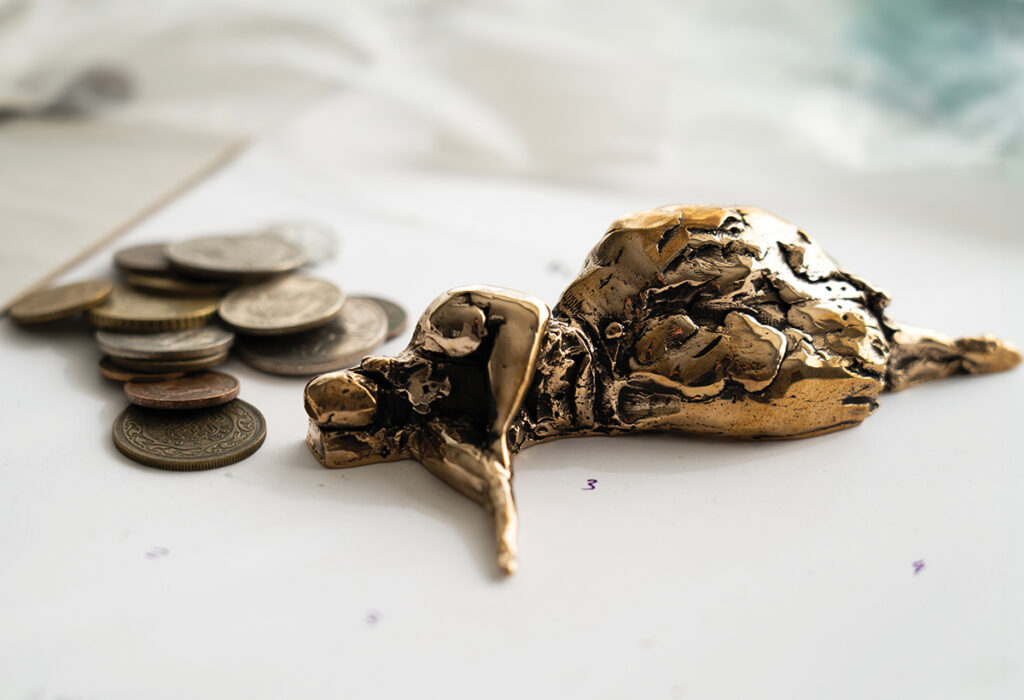
The capability to doubt has shaped the foundations of European societies and their cultural identities for millennia. The act of doubting evolved from a provocative tool for dialogue in 5th-century BC Athens, into a methodical path to certainty in Cartesian Europe, from the 17th century onwards. In the current context of extreme polarisation of ideas and beliefs, re-discovering how to doubt in a meaningful and informed way feels like an antidote to the so-called ‘permacrisis’: a prolonged, seemingly endless period of overlapping instabilities, disruptions, and insecurities from cascading events at both global and local level, such as pandemic emergencies, wars, and unprecedented political scandals. Despite its inherent insularity, Malta was not spared its share of all of the above, leaving its citizens grappling with potential viable remedies.
When meeting with Margerita Pulè, the curator of ‘No Need to Sparkle’, and exhibiting artists Charlie Cauchi, Raphael Vella and Adrian Abela, their awareness of such permacrisis formed the background to our conversation about their work and about their approach based on what they define as ‘doubting well’. “The process was not linear, the artists were not given a brief to respond to, quite the opposite. It was always a conversation between us all, around ideas of doubt, identity, positioning, and personal experience”, says Margerita when explaining how the pavilion came together. “It has been an exercise in doubting well, in understanding doubt as something not necessarily negative nor cynical, but positively critical of our time. This is a pavilion about our time, with many layers – not one which can be easily summarised in an elevator pitch!” she continues, “We are not trying to suggest solutions, our approach is not artivistic either. We raise doubts instead and offer different perspectives”.
In this respect, ‘No Need to Sparkle’ is serendipitously aligned with the theme of the main exhibition, titled ‘In Minor Keys’ and curated by Cameroonian-Swiss artistic director Koyo Kouoh. In a statement written just weeks before prematurely passing away in May 2025, she used the following words to describe her approach: “The minor key, in music, alludes both to the structure of a song and to its emotional effects. It is a rich idea, so rich that it quickly overflows its technical definition and spills with metaphor. It summons moods, the blues, the call-and-response, the morna, the second line, the lament, the allegory, the whisper. The minor keys refuse orchestral bombast and goose-step military marches and come alive in the quiet tones, the lower frequencies, the hums, the consolations of poetry, all portals of improvisation to the elsewhere and the otherwise. The minor keys ask for listening that calls on the emotions and sustains them in return. The minor keys are also the small islands, worlds amid oceans with distinct and endlessly rich ecosystems, social lives that are articulated, for better and worse, within much larger political forms and ecological stakes. Here, the evocation of the key and the island extends to an archipelago of oases: gardens, courtyards, compounds, lofts, dance floors – the other worlds that artists make, the intimate and convivial universes that refresh and sustain even in terrible times; indeed, especially in terrible times.”
‘No Need to Sparkle’ reflects this enchantment in the face of cynicism about what art can do and presents three scenarios belonging to the same world but adopting different languages, raising different doubts, acknowledging that different voices and viewpoints can peacefully coexist.
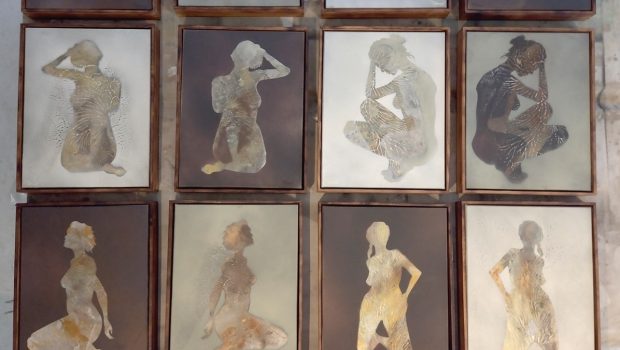
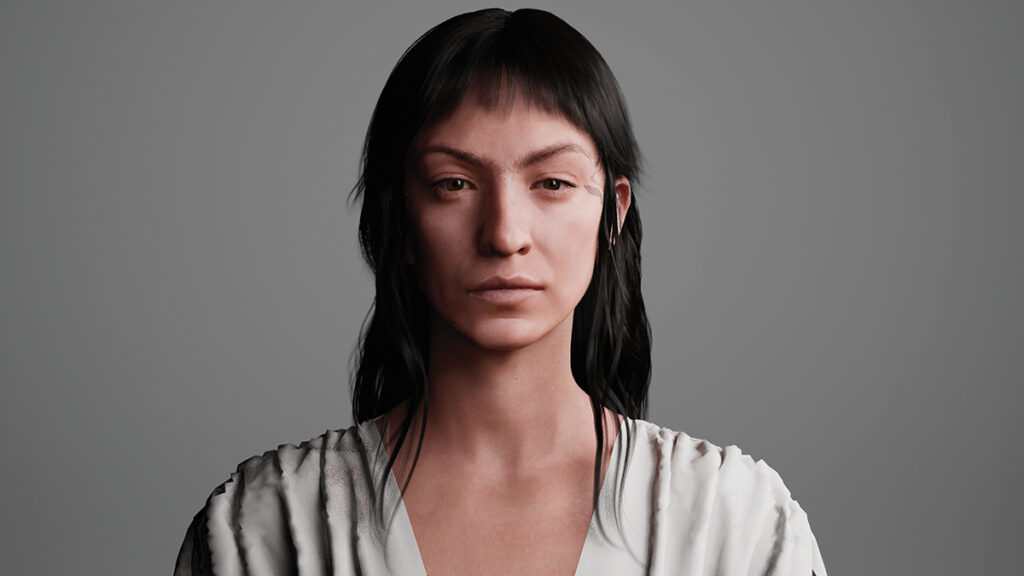
In ‘Declaration of Dependence’ Adrian MM Abela combines gaming and LLM technology to shape Melita, a female figure interacting with the audience on a large screen strategically placed on the main axis of the pavilion. “Melita, as a symbol of Malta, was always represented in the technology of the time, hence the use of advanced AI systems to represent her today. Her declaration of dependence represents all of us, as we embody constructs imposed by our contexts and depending on our background” Adrian explains. This ancient female figure, historically used with ulterior motives by political powers, often in nationalistic contexts, purposely remains ambiguous in message and tone: Melita proclaims a different 3 minute-long declaration each time that a visitor steps on the carpet in front of her, presenting a vast series of permutations based on Adrian’s conversations with AI systems such as Claude and ChatGPT, on how the past can influence the future, indeterminate but already existing, while questioning symbols of nationhood, independence and economic systems. A set of drawings purposely concealed behind a curtain, on the side of the video installation, elaborate further on notions of symbolism and nationalism. “You need a bit of curiosity and willingness to interact with another human to discover this collection of drawings, you will need to follow a clue found in the text on the wall and ask the usher to show you”, explains Adrian, in a playful tone. “There is no intention to preach -he adds, just a call to action: amongst the infinite possible futures and the endless iterations of the same stories, what do we decide to believe? Why?” the artist inquiries. The pavilion demands its audience to make choices all the time. Which screen will you focus on? Which story will you engage with? And which one will you believe? Each installation requires a deliberate choice.
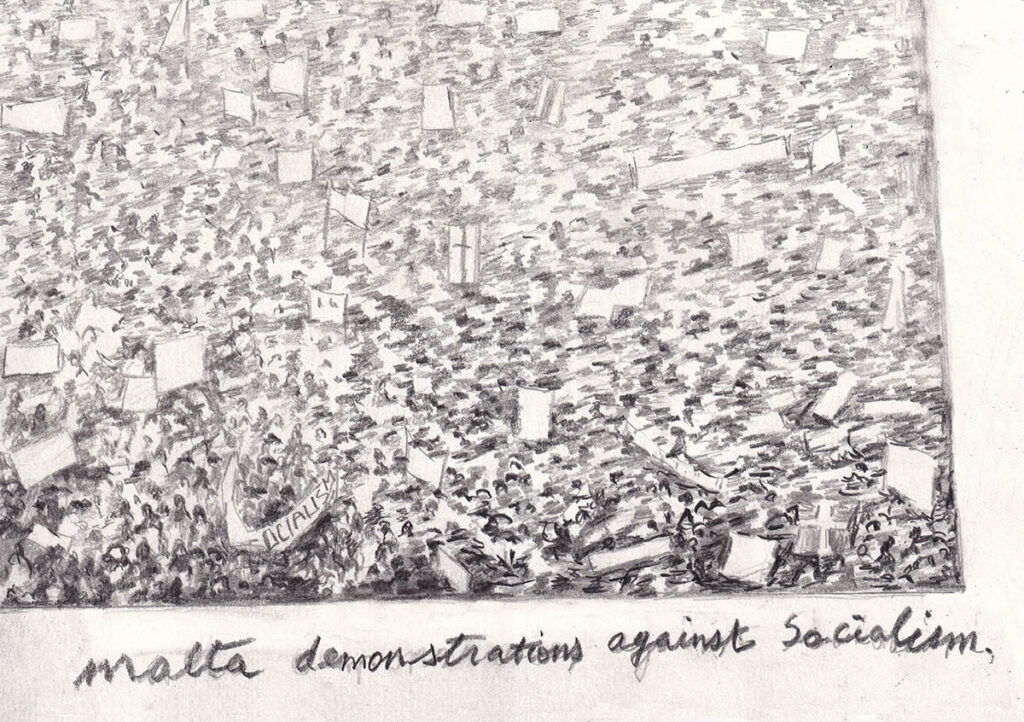
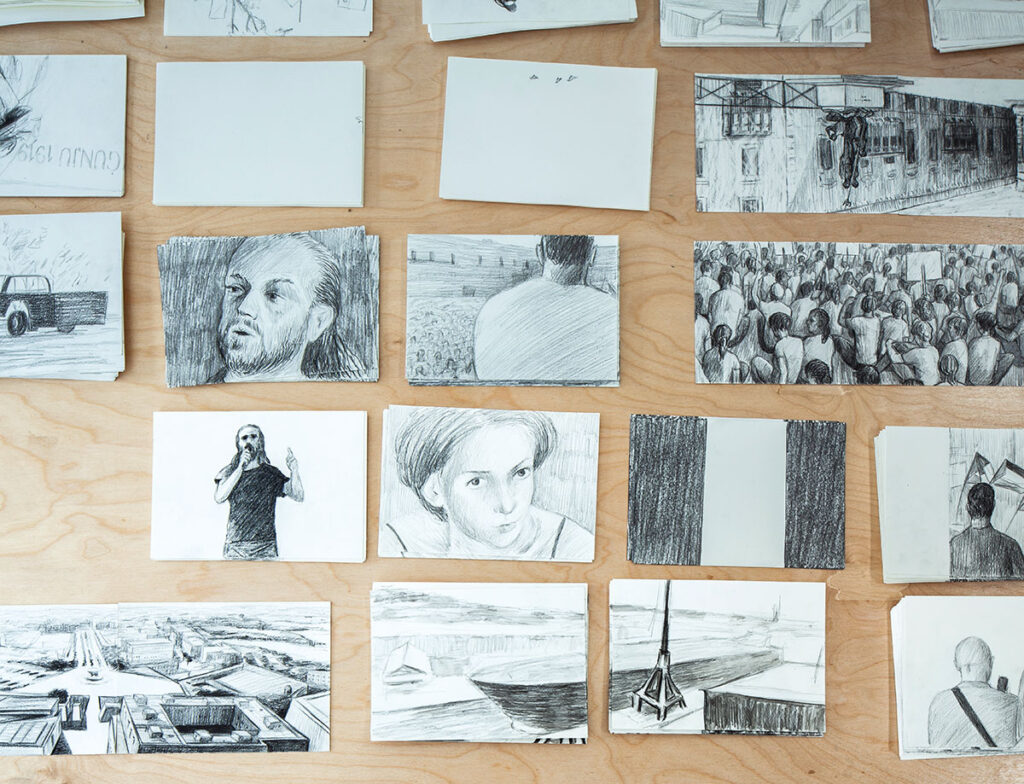
In this spirit, ‘Praying for a Revolution That Will Never Come’, the dual-channel stop-motion animation composed of thousands of images by Raphael Vella, forces the viewer to choose one of the two gigantic screens creating a semi-enclosed patio within the pavilion. The installation spans over a century of Maltese protest history, starting with a representation of the Sette Giugno (1919), as a first recognised moment of revolt of the Maltese population as an entity united by some sort of national spirit, and concluding with the most recent protests demanding justice for the journalist Daphne Caruana Galizia, brutally murdered in 2017, and with the position of Malta vis-à-vis global phenomena. Scenes from the numerous marches organised by various entities over the years in defence of women’s rights, protests against the excessive development of speculative real estate on the islands and other scenes from significant moments of collective dissent are also included, retracing the development of the Country from British colony to independent European nation. “Hundred years after the sette giugno, where are we? What have we achieved? How solid or fragile are our democratic values?” Raphael asks, adding thatthe two screens are purposely extra-large and positioned at an angle in order to make the work feel immersive, drawing the viewers to question their political ideas, their position with respect to key topics such as colonialism, while reminding us that democratic achievements are rarely permanent. A 350 kg bale of discarded posters from the protests depicted by Raphael sits within the space as a sculptural piece suggesting that values and ideas will never go to waste and will never be completely discarder but will always transform into something else.
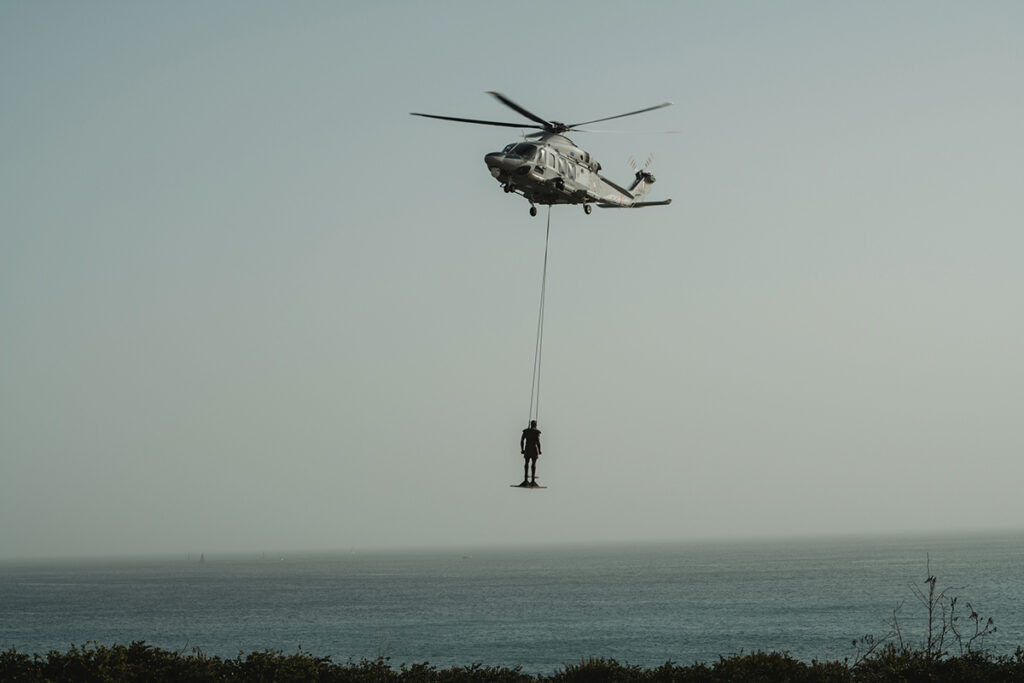
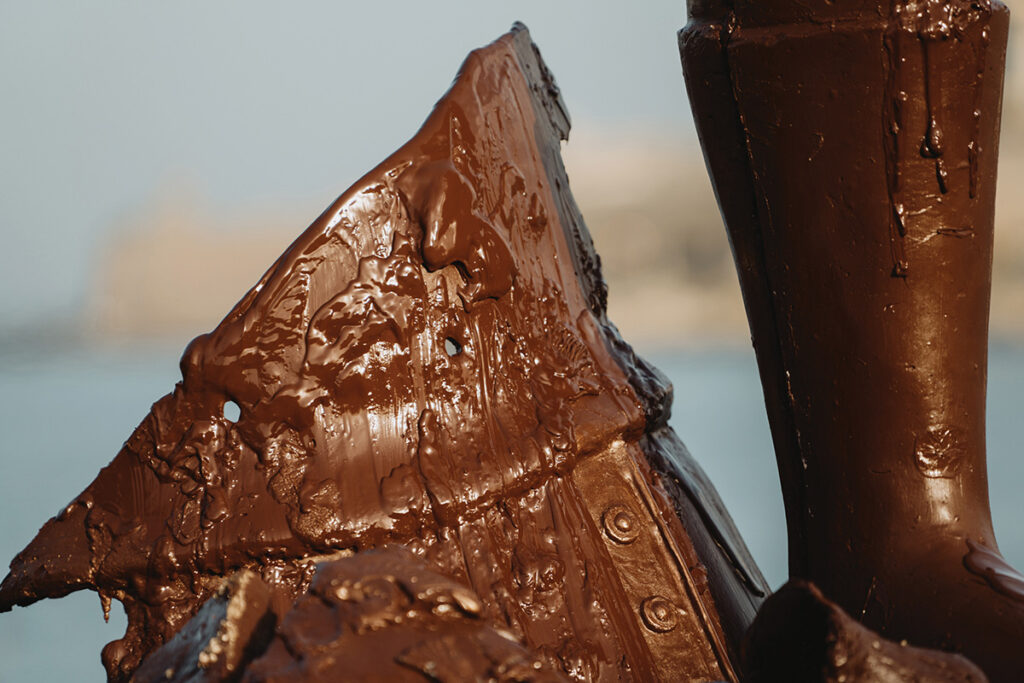
On the other side of the pavilion, on an equally large screen, ‘Dolce’, a film by Charlie Cauchi, tackles similar questions in a surreal, playful and at times sardonic tone. Referencing the iconic opening scene of Federico Fellini’s ‘La Dolce Vita’ and inspired by the life-size chocolate statue of Russell Crowe as Maximus in ‘Gladiator’, made by Maltese chocolatier Tiziano Cassar in 2023, the installation comments on themes of national identity. “Malta, as a film set, rarely plays itself, it tends to be used to depict other locations, and we adapt to it. Our identity changes according to the narrative imposed on us, on the role we are asked to play” says Charlie, using the film industry as a metaphor. For ‘Gladiator’, one of the most popular films filmed on the island, corners of ancient Rome were re-created within the ruins of historical military structures such Fort Ricasoli. During the filming, across the Grand Harbour from Valletta, one could clearly see the profile of the reconstruction of a third of the Colosseum, in what seemed like a permanently hallucinated landscape. The opening scene of ‘Dolce’ presents this same degree of surrealism, portraying a gigantic chocolate-made Gladiator being flown over our actual heritage, dangling from a helicopter. The boundary between what is just a film set and what is real heritage becomes blurry, and the audience is encouraged to question this almost farcical representation of Maltese identity.
“These works adopt different media in different ways but eventually read like one texture” adds Margerita, who emphasises how the spatial negotiations skilfully coordinated by architect Mark Sullivan, co-founder of SON Architecture, were key to the successful outcome. Imagined like an agora, the public assembly area in ancient Greek city-states, the centre of the pavilion is populated by modular seats which can be easily interlocked or moved around and serve whichever purpose the visitors will wish the pavilion to fulfil: a restful break engaging with the video installations, or the ideal set-up for a moment of debate and collective reckoning. Once again, ‘No Need to Sparkle’ demands its audience to make a choice.
The Malta Pavilion at the 61st International Art Exhibition – La Biennale di Venezia 2026 is commissioned by Arts Council Malta. Adrian MM Abela, Charlie Cauchi and Raphael Vella represent Malta at the 61st International Art Exhibition – La Biennale di Venezia 2026 taking place from the 9th of May until the 22nd of November 2026. The Malta Pavilion, titled No Need To Sparkle is curated by Margerita Pulè, with architects SON architecture, and project-managed by Tamara Burr, with Outreach by Kathrine Maj with visual identity by Alexandra Pace. It is produced by Unfinished Art Space with R Gallery. We are grateful to all those who have supported the Malta Pavilion. Our Gold Sponsors are Alpha Rental Ltd, Attard Holdings, Bank of Valletta, Frendo Advisory, Grands Suites, Malta Enterprise, People and Skin, Visit Malta, and Zampa Partners. Silver Sponsors are Form, MIB Insurance Brokers, MySchool, Stilla, and Strawberry Fields Our Cultural Partners are the Office of the Deputy Prime Minister and Ministry for Foreign Affairs and Tourism, the Embassy of France in Malta, Francis Sultana, and Hamrun Local Council. Thank you to our Production Partners Media Station and Primavera, Design Partners Camilleri Paris Mode, Jade Interiors, and JoinwellFxb, and collaborators Aerial Malta, DAMS Design and Manufacturing Studio, Envi Innovations Ltd, Godwins Garage, onepercent, Palazzo Parisio, Supper Club, WasteServ, 360 Pictures Ltd.
Thank-you to Private Patrons Michael Bonello, Mark Camilleri, Joanna Delia, David Gauci, Sandro Raniolo and Christine Pillsbury. And thanks to Alpha Medical Ltd, Armed Forces of Malta, General Cleaners, Khiron Security, Public Broadcasting Services Ltd – Archives Department, Rosa Kwir, Scan Malta, University of Malta.