GEYTONYA
Queer Oases in Concrete Anthills
In the shadow of post-WWII brutalist towers – those gray, boxy monuments to rapid urbanisation across Central Europe, the Balkans, and beyond – queer lives have quietly bloomed. Photographer Stefan Mogolyanov fuses “gay” with “geitonya” (neighbourhood) to name Geytonya, a poignant photo series celebrating gay men who reclaim these faceless spaces as stages for identity and intimacy. Drawing from his own Khrushchevka childhood, where pop icons blasted from hidden speakers amid Soviet sameness, he asks: What vibrant worlds do queer kids build in architecture designed to erase them? In this interview, he reveals how adrenaline-fueled shoots in forbidden stairwells, real-couple chemistry, and contrasts between soft flesh and hard concrete challenge queer visibility, turning antagonists into allies.
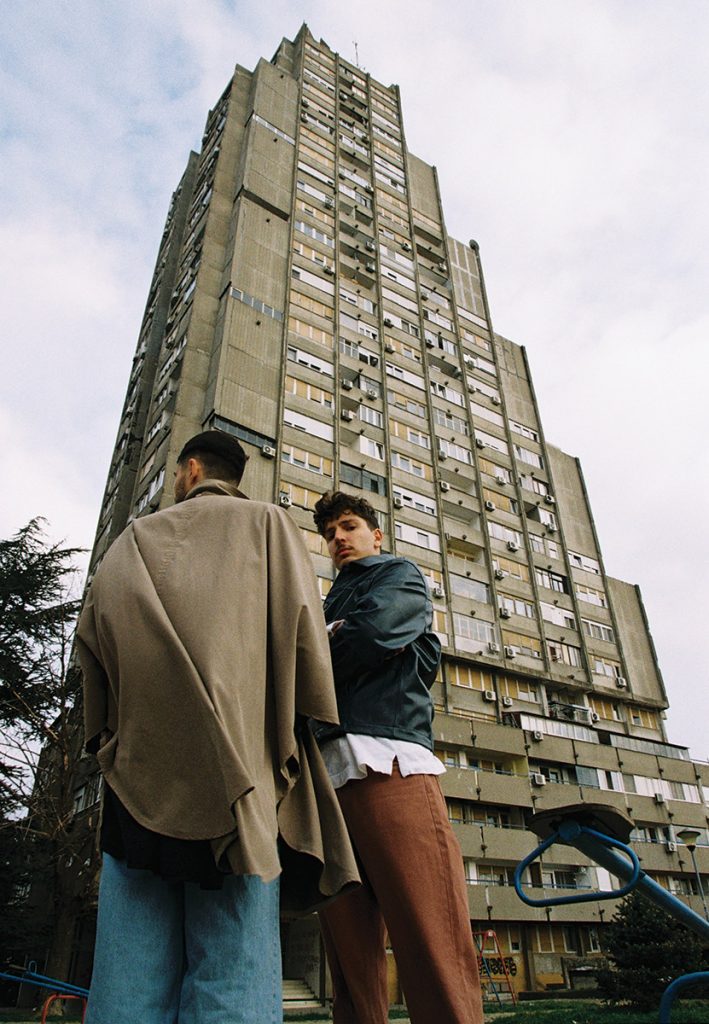
“In the spaces where Geytonya is shot, the mere idea of being gay is traditionally blurred or unspoken of…”
Q&A
“Geytonya” plays on the words “gay” and “geitonya” (neighbourhood). How does this linguistic fusion reflect the emotional or political core of the project?
Central Europe and the Balkans are known for the high-paced urbanisation in the post-WWII period. The rural-to-urban migration has made the cities rapidly change their “face”, going gray, concrete, edgy and box-like. Whether it’s the Mediterranean modernism of Athens, Istanbul’s mass-apartment projects or the functionalist and brutalist architecture of the socialist countries, people have been attempted to be deprived of personality and colour for the sake of practicality and relative comfort.
I spent a significant portion of my childhood in a khrushchevka. Those were USSR’s low-cost, panel buildings, designed during the leadership of Nikita Khrushchev and named after him. I was always fascinated by how, despite the exterior sameness that the Soviet authorities have tried to implement, apartments’ interior was always a unique oasis, shining of their residents’ personalities.
As a gay kid, I adored the pop icons and would always want a new CD as gift instead of toys and other things children like. I had my loudspeakers that I would spend hours sitting by, listening to the finest voices of the post-Soviet pop scene. Remembering this made me wonder: what kind of worlds have gay kids living in gray, faceless buildings created for themselves?
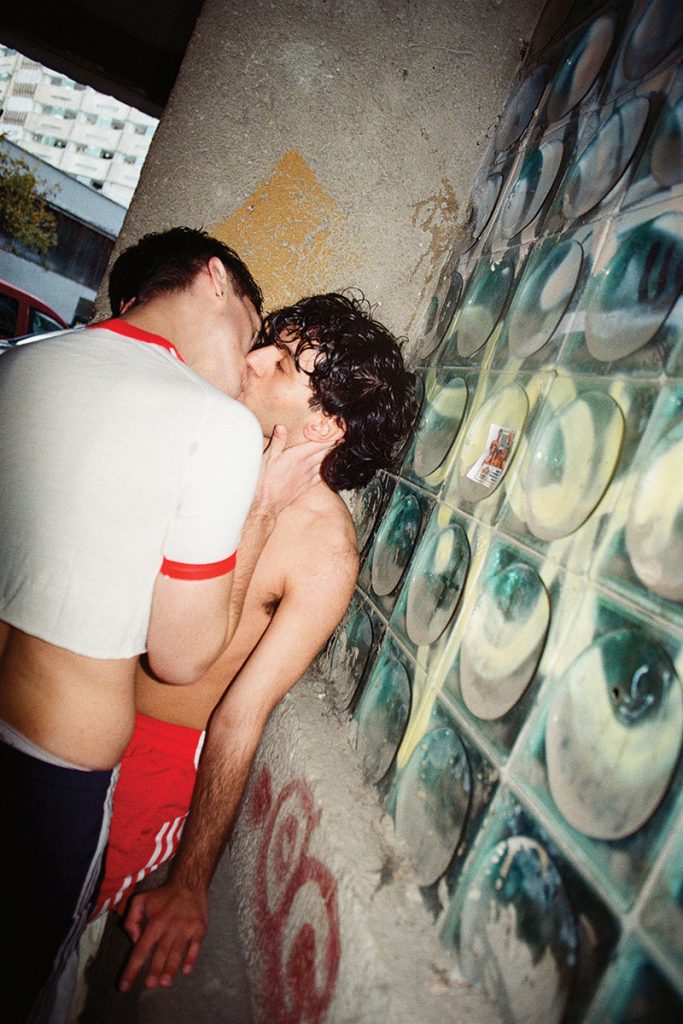
Geytonya is a dedication to growing up in spaces that actively try to erase one’s identity and breed sameness, and, nevertheless, being able to cultivate and embrace these identities despite the external limitations.
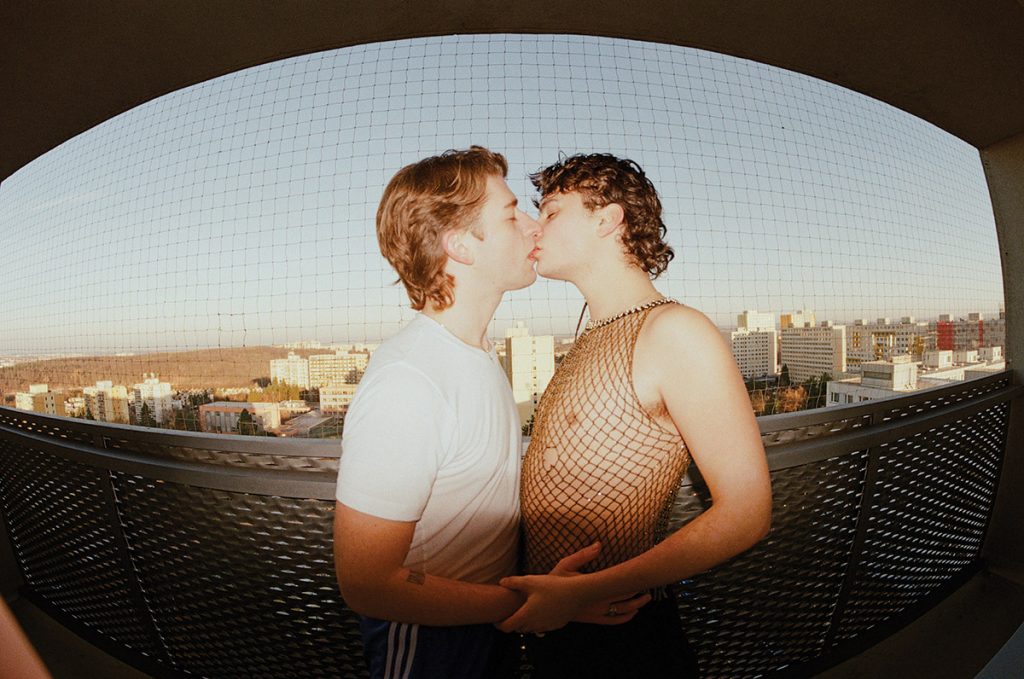
How did you navigate the tension between visibility and vulnerability while photographing your subjects?
I try to let the subjects connect with the idea and the surroundings on their own terms.
All of Geytonya’s participants have grown up seeing the gloominess and industriality that the post-WWII mass housing has brought. Whether it’s Novi Beograd or Ceaușescu’s dystopian projects, it runs in subjects’ blood, as the generational heritage and through their own experience.
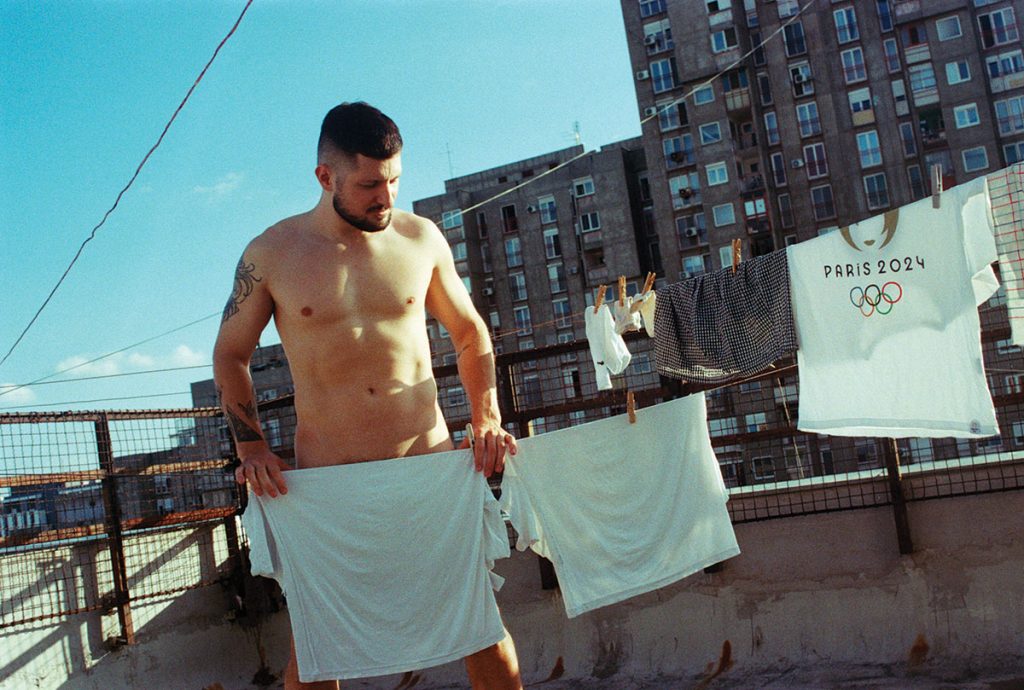
When planning a photoshoot, I ask my models to prepare clothes that play on the contrast between the brutal and the soft, the feminine and the masculine, and those that feel authentic to themselves. For me, it’s important to create the visual conflict but also stay true to who each Geytonya individual is.
When we’re on the spot, I ask the subject to interact with the surroundings, to own the space.
One of the hardest tasks during the shoots is to get inside the buildings, but, when we end up doing it (and sometimes get kicked out), it brings a lot of healthy adrenaline, very beneficial for the participant opening for the camera in a way that’s raw and urgent.
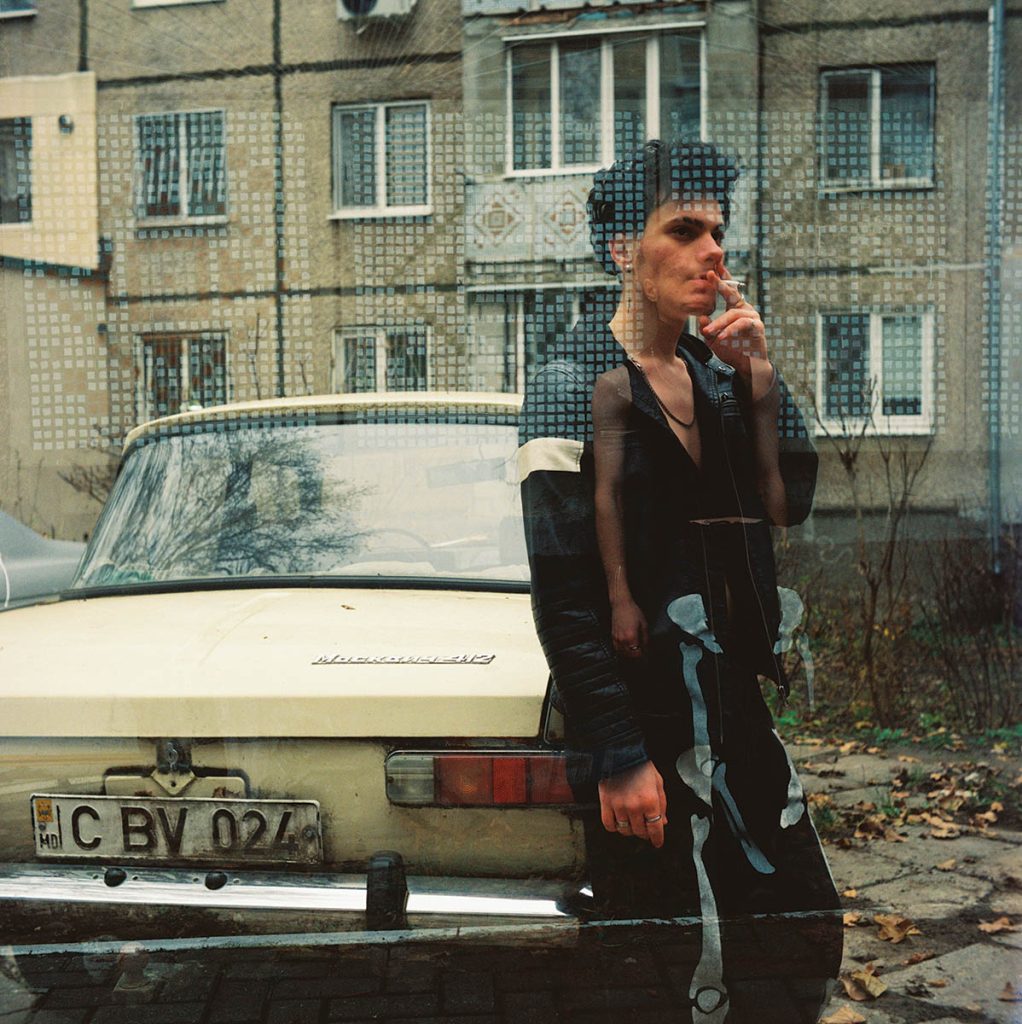
In what ways does this project challenge or expand traditional representations of queer communities in photography?
In the spaces where Geytonya is shot, the mere idea of being gay is traditionally blurred or unspoken of. It’s like – everything exists there: birthdays, weddings, funerals, fights, reconciliations, pets, life’s milestones. Everthing but LGBTQ+ community.
When these mass-housing projects were built, the topic of queer people was a taboo. It existed, at best, somewhere in a gray zone, and, at worst, like in Soviet Union, was outlawed.
In big cities, in the very centre, exactly where this kind of architecture was not present, some venues for queer people could be found, but not there, in the box-like neighbourhoods.
Now, as being accepted for who you are has become more of a reality for our generation, I thought it would be a great opportunity to finally celebrate the visibility in the places that have traditionally erased the queer presence.
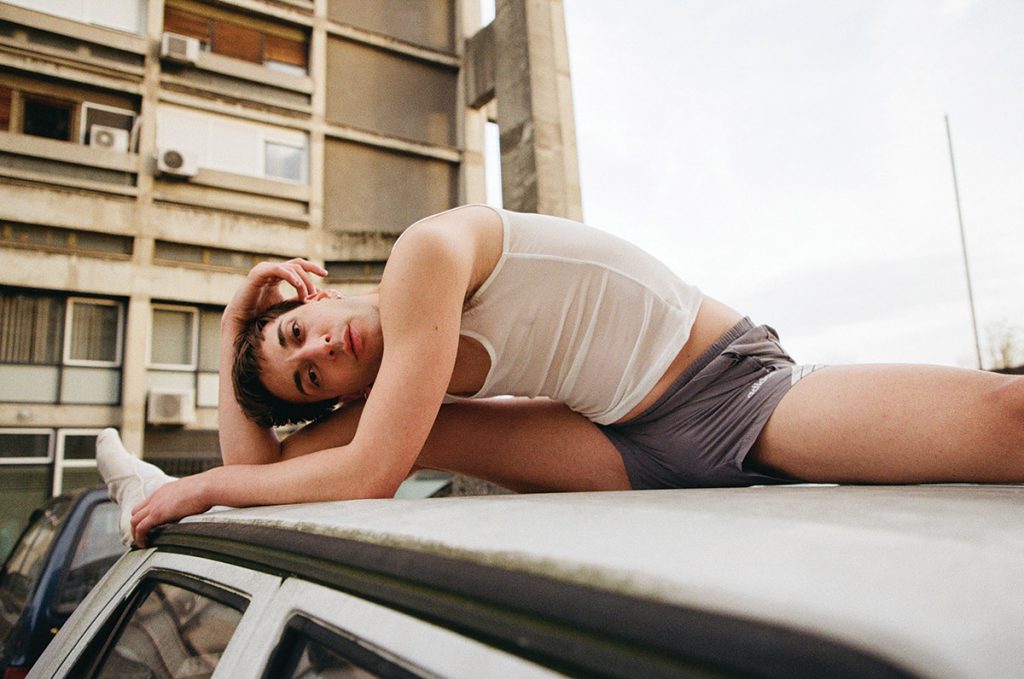
Did you approach the work as an insider, an observer, or something in between – and how did that position shape the images?
In general, for passion projects, such as this one, I believe that the so-called “vibe” is of immediate importance. If I feel that the model “gets” what I am doing, that’s basically all I need to know that the shoot will lead to a positive outcome.
During the shoots, I like to listen to subjects’ stories – and, as it nearly always turns out – they are very willing to share. For example, with one of my models we shot inside the first building in Moldova with two-storey apartments, and the architect of this building was his grandfather. That felt special.
As said earlier, I grew up with those “human anthills” being all around me – so that makes me an insider, but during the shoots, my models all share different insights and interact with the surroundings differently, and thus my task is to show them through my lens preserving their authentic voice.
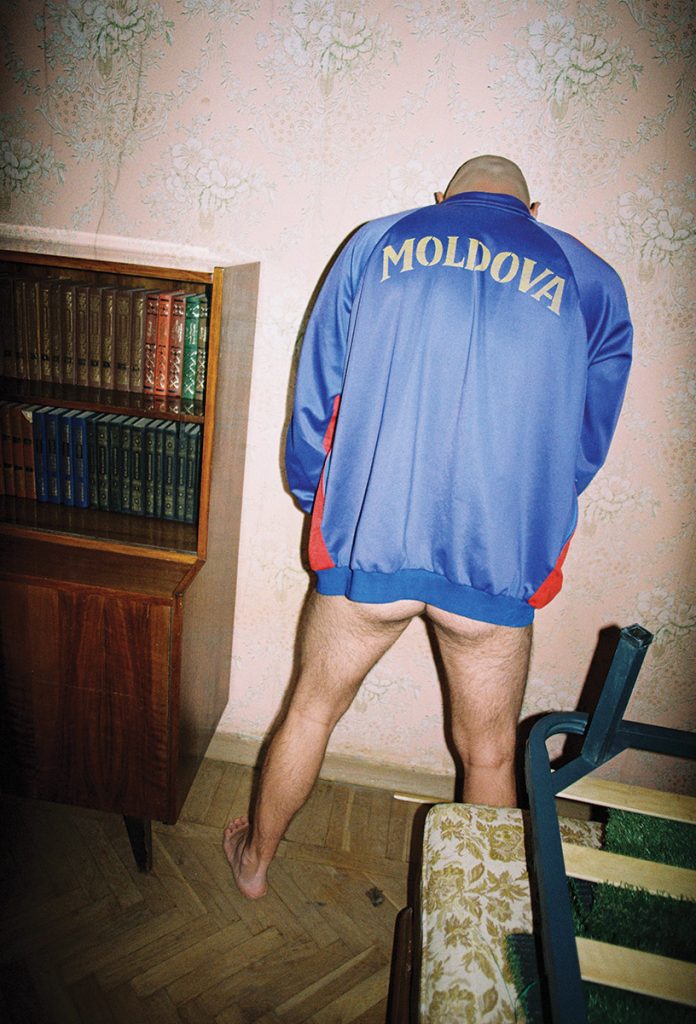
Can you describe a moment during the making of this project that shifted your understanding of the community you were photographing?
I kind of adopted the faith in “photography God”, which means that any photograph, any model, any location that is meant to happen, will happen. It’s a way to cope with rejections, last-minute shifts and on-the-spot situations.
The photoshoot that led me to Geytonya and deeply changed my perspective of my own visual language was the one I did in Belgrade a year ago, with a beautiful couple Filip and Nikola.
It taught me two things. First: when your original planned location is unavailable for any reason, keep searching, chances are you’ll find something even more exciting. We were originally aiming to shoot in a Yugoslav-styled AirBnB, but the owners did not welcome the idea. So I got us permits to shoot inside the train of Josip Broz Tito, Yugoslavia’s founding leader. Now, that was a truly wild location to shoot a gay couple in: wild in the best sense of this word.
But what this photoshoot truly taught me is that a real chemistry between subjects is just irresistable, and makes photographs bloom in a way staging doesn’t. And Nikola and Filip have crazy chemistry. Camera sees when it’s forced, camera sees when it’s real. From that point on, I decided: for Geytonya, if it’s a couple, it’s only a real-life couple.
What role does intimacy play in your visual language – and how do you build trust quickly enough for it to appear authentically?
I view every shoot for Geytonya as intimate. Intimacy doesn’t have to include nudity, it’s always an option, never a must.
If I feel a genuine interest and initial trust from a model, everything can be built upon that. That’s all that’s required along with being a queer man or a queer person chanelling masculine energy.
And, on the contrary, if the vibe is off from the beginning, if I feel that a person approaches my work judgmentally or condescendingly, if they don’t believe in Geytonya in the way I do, I just don’t continue engaging.
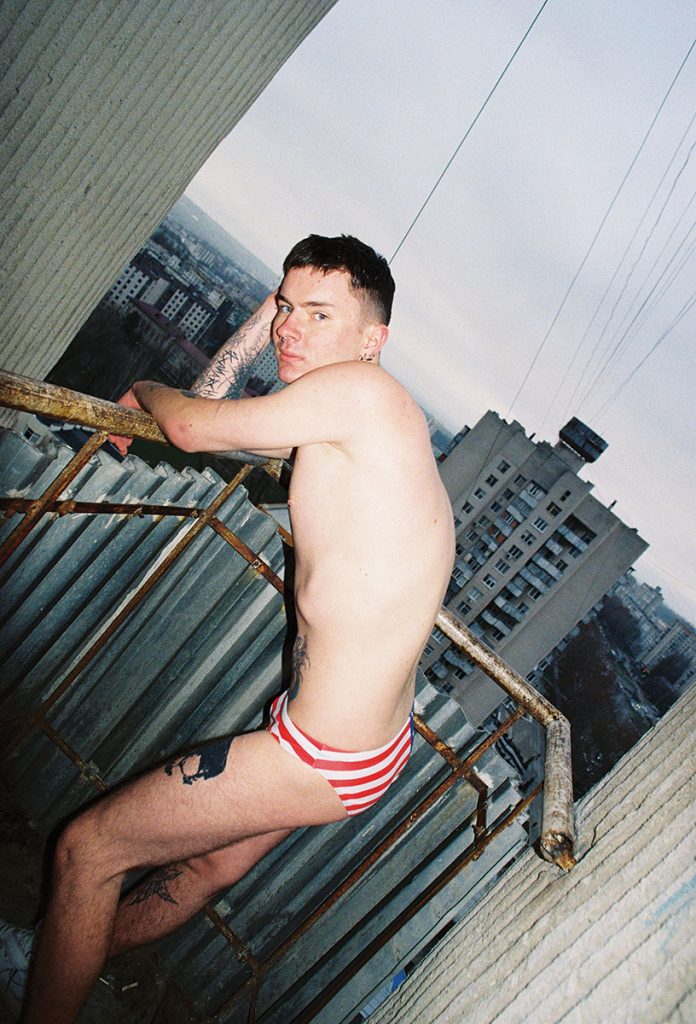
When it comes to nudity, there are many people who are eager to fully undress in front of the camera. To celebrate their body, their queerness, their aliveness or just cause “why not”. Nudity put in the context of semi-private spaces like the staircases of the residential buildings brings a level of excitement of doing something rebellious for the sake of being rebellious and a statement of the body being imperfect, having signs of years that went by (in a form of anything: from tattoos to stretch-marks) and yet, being very much alive – all similarly to Geytonya locations.
How does architecture or urban space function in the series? Is the neighborhood a backdrop, a character, or a silent witness?
If my characters are protagonists, then the architecture is an antagonist. Both bloom off the contrast, both are crucial to move the story forward. So, just like the humans, urban spaces are main characters, challenging the participants to interact with them on their own terms.
If this book was experienced without captions or context, what emotional journey would you hope the viewer takes?
I’d hope, first and foremost, that the viewer feels something. If my work doesn’t leave them indifferent; if things don’t quite make sense on the surface but somehow give the inner satisfation of the two puzzles that have aligned; if what they see raises questions, makes them want to look at the next page, wonder what’s going here and then be like, “Aha…”, that’s all that that matters to me.
In my art in general, I am not aiming to offer any final resolutions, I want to take my audience on the road together with me, to see things, to feel things, processed through their own inner lens.
Queer guys, strict geometrical spaces, what does this mean? I want my audience to find a reflection of themselves in Geytonya.
What conversations do you hope “Geytonya” sparks within queer communities – and what conversations do you hope it provokes outside them?
I hope that queer viewers, whether they have had their upbringing in similar spaces, or have only witnessed them as outsiders, take a look back at everything that have seemed gloomily mundane in their personal history and realise how, it fact, those rituals and repetitions have bred that uniqueness that makes them who they are, or how they have preserved that something special in spite of the surroundings.
And I hope that people from outside the LGBTQ+ community just once again do a mental check that invisibility and erasure can never be attempted to be made a solution again.
“Geytonya is a dedication to growing up in spaces that actively try to erase one’s identity and breed sameness…”